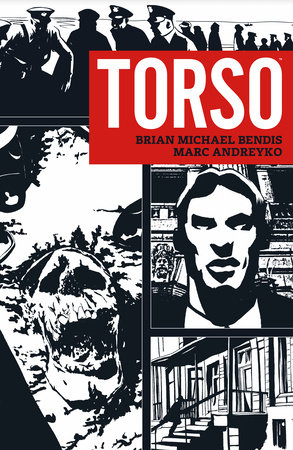
Torso with Marco Andreyko by Brian Michael Bendis

Brian Michael Bendis joins Splash Pages Comic Book Club on St. Patrick's Day for a sprawling, generous conversation about 30 years in comics. He traces his path from early crime work — Jinx, Torso, Sam and Twitch — through the Marvel era that produced Ultimate Spider-Man, Daredevil with Alex Maleev, New Avengers, and 100 issues of X-Men. He opens up about the autobiographical origins of the Kitty Pryde antisemitism speech in All-New X-Men #13, recalls how Civil War emerged in four minutes from a three-day creative retreat, and explains how Frank Miller's observation about Batman freed him to write Batman Universe as Brave and the Bold. He confirms Spider-Man/Superman with Sara Pichelli is coming, previews a Powers 25 announcement, and reveals Netflix is developing Torso with an Academy Award-winning screenwriter. Plus: the Squirrel Girl nanny origin story, the Sony web shooters meeting, and why Miles Morales is a hug that never stops.
When I was 12 years old, Walt Simonson did that to me and he completely changed my life. He did not have to. He just absolutely stopped what he was doing and took me seriously for a few minutes. And that was it. I was in comics.
Brian Michael Bendis on Splash Pages Comic Book Club
Torso came up as part of the conversation in this episode.
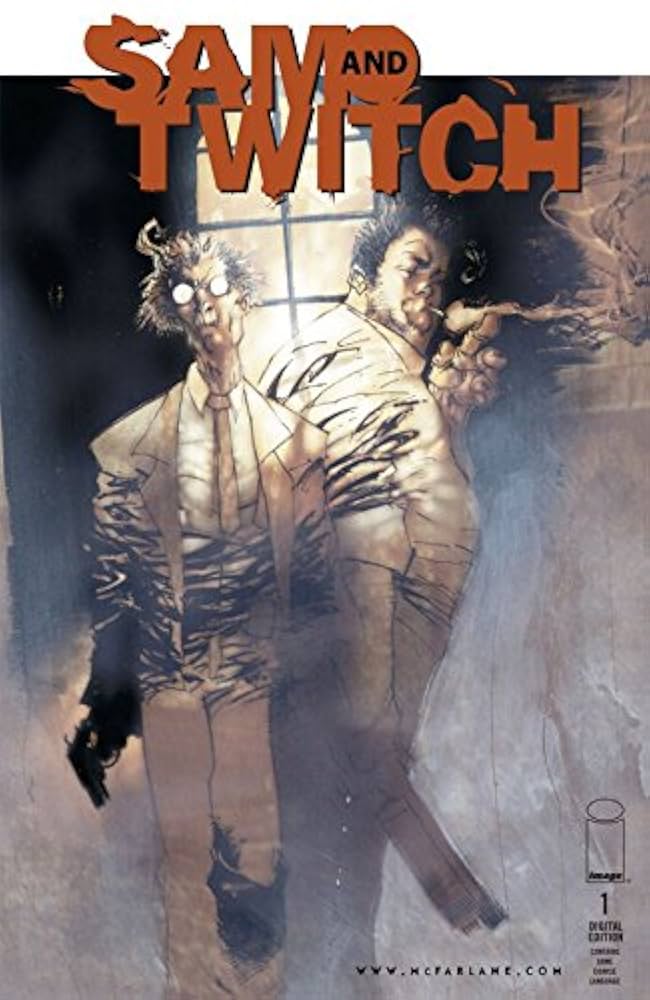
Sam and Twitch came up as part of the conversation in this episode.
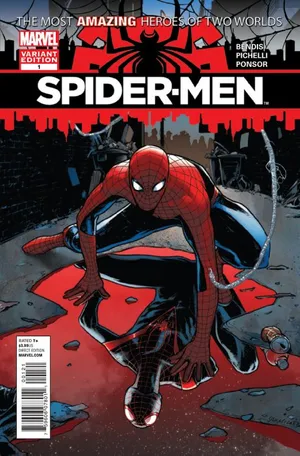
Spider-Men came up as part of the conversation in this episode.
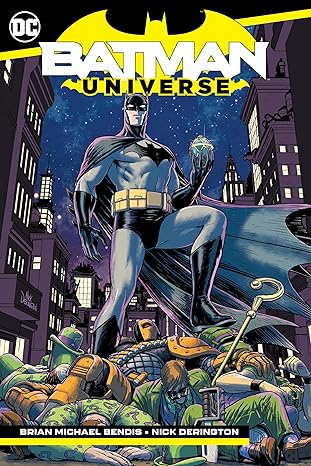
Batman Universe came up as part of the conversation in this episode.
The idea came from Bendis becoming a parent for the first time. He started thinking about what Jessica Jones and Luke Cage’s domestic life actually looked like and decided they’d need a nanny with superpowers. When he asked around the Marvel offices for character suggestions, Squirrel Girl’s name immediately clicked. They staged the announcement at a Wizard World Chicago panel — and the applause was so loud and sustained that Bendis looked around the room, convinced Stan Lee had just walked in. “It was 100% Squirrel Girl-related enthusiasm,” he told Splash Pages. “I almost cried.”
Bendis told Splash Pages that Civil War emerged in just four minutes at the end of a three-day Marvel creative retreat where something else entirely wasn’t working. He compared it to Dolly Parton saying she wrote Jolene in five minutes — possible only because of the 20 years of creative development that led up to it. The retreats were week-long sessions where the Marvel writing staff would gather to plan the shared universe. Bendis said that many of the most celebrated Marvel projects from that era — Civil War, Astonishing X-Men, Iron Man Extremis — came directly from those conversations.
Bendis told Splash Pages the page is autobiographical. He had been on a date where the woman began making antisemitic comments, not realizing he was Jewish. He was left deeply shaken. Years later, that experience went directly onto the page through Kitty Pryde — a Jewish character who doesn’t visibly appear Jewish and finds herself in similar situations. He described writing it right up to the edge of “I don’t know if I should even share this” and said the response overwhelmed him. “Your best work is right on the edge of super embarrassing,” he said. “When you’re right to share it, it makes people feel better and more human.”
Bendis confirmed that Netflix acquired Torso last summer and that he and co-creator Marc Andreyko recently had a Zoom with the screenwriter — described as a not-yet-announced Academy Award winner. Torso has been in Hollywood development almost continuously since it came out in the late 1990s: David Fincher was attached for years, Paul Greengrass was involved, and Corin Hardy was in development before the pandemic. Bendis said he remains cautious but that “this version right now feels very strong.” He also noted that when he asked his lawyer whether Torso was approaching the record for longest-optioned-but-unmade book, he was told no — Dune holds it at 55 years.
Cleaned transcript below. Editorial section headings and quote callouts have been added for readability.
Opening sponsor condensed: The episode begins with the standard Deadly Grounds Coffee cold open before the hosts bring Brian Michael Bendis on for the live conversation.
Leo [00:03:43]: Hey, hey, happy Tuesday everybody and welcome to Splashgate. We have an amazing schedule for you. Holy crap, what the heck was that? Anyway, okay, we’ll quickly go through the run. Kari, how’s it going?
Kari Sanders [00:03:59]: Going great. Happy St. Paddy’s Day, everybody. Happy Tuesday. Glad to see you all here. We have an amazing show like Leo was saying and we got a lot of people here tonight. So let’s just skip on around and see how our other goth is doing.
Jar Jar Jeremy [00:04:12]: I’m not the other goth, but hey, how’s it going? Happy to see you all. Hi Sophia in the comments. Oh yeah, everybody knows her. So yeah, let’s get to the show, Drew. Or hold on, no, we’ll get to MJ.
Leo [00:04:33]: Popped in. Hey MJ.
MJ (Mahanna Jade) [00:04:35]: Yeah, sorry about that, guys. Really bad windstorms and the internet was out for a bit, but I’m back and we’ve got power even, so I’m really looking forward to tonight’s show.
Leo [00:04:46]: Awesome. Mr. Drew, who do we got with us today?
Drew Mollo [00:04:49]: Well, first things first, everybody — happy St. Patrick’s Day to you all. Here’s a Guinness. Love y’all. All right, so everybody, we geek out a lot at this show. We have a lot of great guests, legends in the industry, big people. Inkers, you know, salt of the land. The guest we have on tonight is one of my personal all-time favorite writers of the last decades — plural. There’s very few things at Marvel he hasn’t touched in terms of characters. Everything is fantastic — Spider-Man, Avengers, Ultimate X-Men, Ultimate Spider-Man, Ultimate Fantastic Four. Alias, Daredevil, Man of Steel, Batman — the list goes on and on. I had to change my shirt because I was so excited. It was originally a white shirt, now a black one. But everybody, the one, the only, the extremely chatty but still smiling Brian Michael Bendis.
Brian Michael Bendis [00:05:57]: Hey, that was very nice. Thank you, thank you guys.
Drew Mollo [00:06:00]: Before we begin, everybody, we do everything by the book here. I need to let you know something. The reason I changed my shirt is because I was wearing a Gorillaz shirt. And I met this man in 2016 at a signing that I covered. And he talked to me like I wasn’t a weirdo. And I was dressed in all black and I had a Gorillaz shirt because it was my anniversary and my wife got me a Gorillaz shirt. So long story short, he took a picture of me on a flip phone.
Brian Michael Bendis [00:06:28]: I remember — I remember the flip phone. It was — I remember this. I remember this.
Drew Mollo [00:06:32]: And then he went and signed all my stuff. He signed everything. I had a massive stack of Bendis stuff and he very graciously signed everything and stopped to take pictures with me. And I remember thinking to myself, okay, this is what a person with good values acts like because he didn’t have to. He was kind. He was warm. And that’s, that’s to me, that’s a class act. And it’s the same, it’s the same energy that Brian Michael Bendis has when he’s chatting with everybody. And so I just — I’m geeked out, I’m already geeked out.
Brian Michael Bendis [00:07:05]: I am so glad you are still here and making content for people to enjoy. I really am. Because — and also, I, I was thinking about it. I mean this as a compliment — you were putting — you were not being cynical. You were just going at it with joy and enthusiasm. And I was like, that’s, that’s great. Like that, that, that — there needs to be more of that in this world. And to see it still existing and growing and getting better is like, yeah, that’s the — that’s why we do this.
Drew Mollo [00:07:40]: That means a lot coming from you. Thank you so much. And by the way, if you’re watching — the Gorillaz shirt is in a bin now, just in case you were wondering.
Brian Michael Bendis [00:07:50]: You should put it in a glass frame. That’s a special shirt.
Drew Mollo [00:08:14]: So I have to ask — and I’m so glad the other night in prep, Leo found out that — this is such a cool thing — that you put John Siuntres — the great John Siuntres from Word Balloon — in as an Easter egg in Ultimate Spider-Man. Can you tell us about that?
Brian Michael Bendis [00:08:40]: Sure, sure. So John is a — he has been a — he’s a Chicago radio presenter and a, you know, a great podcaster, and he makes a lot of content about comics. And he was — he was one of the very first voices that was like championing me. He had me on Word Balloon many times and we spent a lot of time together. And the thing about him — he is like Chicago as a person. He is a very specific type of Chicago person that I, as a Cleveland person, I — there’s a certain thing about Midwestern, but it’s like — he reminded me of every single person from my neighborhood growing up. And so he became a character in Ultimate Spider-Man because of that, because he just — he was — I wanted that kind of guy around Peter Parker. You know, the world Peter Parker lives in includes guys like John. And so his name went on the books — he’s a teacher at the school. It was just a like, hey, you’re, you’re in. And he was, he was very touched by it.
Kari Sanders [00:09:44]: You know, John is one of the best interviewers in comics. He is just incredibly talented. I know — I can’t believe you said that first, but like he really is.
Brian Michael Bendis [00:09:52]: He is. He really is. And I’ve been on his podcast so many times, and we’ve had such a good time. And he’s also — he’s like, he’s like, so — and I know this because I’ve met his wife, and like, like — he cares so much about what he does, and he cares so much about the people in the industry that he makes things better just by being in the conversation.
Drew Mollo [00:10:13]: And not just that, Brian, but you also put another Easter egg in there. You put Olaf Beemer [VERIFY SPELLING] — this is a prolific letter writer — I think he’s a prolific letter writer —
Brian Michael Bendis [00:10:22]: Olaf is one of the people — I’ve been in conversations with him my whole career. This is like — there are people who are like — there are fans who show up and just like make the space better. And he’s one of those people. He’s been — he’s been commenting and engaging not just with my work but like in a really — you know, like in a really like, lovely, I’m just here to appreciate things kind of way. And so he showed up in there too, and I read his letter on the air one night. And it was a lovely experience.
Leo [00:10:55]: How does someone get in a Marvel comic? Is there a protocol for this or is it just like —
Brian Michael Bendis [00:10:59]: No, it’s just — it’s just you know someone who’s writing a book and they like you and you get in. That’s the whole — that’s it.
Drew Mollo [00:11:11]: So Brian, can you tell us — because you’ve kind of said it before but I just want the newer audience to know — you didn’t go to DC first, right? You went straight to Marvel. What was that journey like?
Brian Michael Bendis [00:11:29]: So, um, you know, some of — my crime comics had gotten a lot of attention. And you know, like Alias and like — the stuff I was doing was getting some — I was getting some attention in that space. And you know, uh, Bill Jemas and Joe Quesada were putting together — trying to put together something specifically to — they were literally trying to reach the kid who used to read comics but stopped — and get back to them. And so their answer was to create something from scratch for them. A Spider-Man story from scratch, from the beginning — but modern. And so they — and there were a lot of people who could have done this, right? This isn’t like — I was not the first person considered for this. But I ended up being the one who — they brought a few people in, and I pitched this, essentially I pitched the TV show version. Like, I’m going to write this like it’s a TV show. And they went, oh yeah, that’s it.
Brian Michael Bendis [00:12:30]: And I didn’t realize that’s what I was going to pitch until I said it. And then it’s like, oh. And also I had no idea how to write a comic. I’d been writing comics for a little while but I, you know, it was a lot of creator-owned stuff where, like, I’m doing everything. And so to work in a shared universe was a whole new education. And yeah, and then — and I was lucky that Joe was so supportive during that, and Mark Bagley showed up, and we just, you know, we were off.
Kari Sanders [00:13:16]: Um, so I want to go back to Sam and Twitch for a second.
Brian Michael Bendis [00:13:20]: Sure.
Kari Sanders [00:13:21]: Um, because you’ve got this really interesting relationship with Todd McFarlane, who’s always been Spawn — Spawn, you know, I love Spawn. Don’t get me wrong. But how did you actually get involved with Sam and Twitch? Because it’s such a specifically, you know — those two characters are so specific that it seems like an interesting take-over of something that wasn’t all yours. How did that go?
Brian Michael Bendis [00:13:47]: Sure. Well, it was mine as a co-creation with Todd, right? Like it was — when I came in, these were characters that had appeared in Spawn. And Todd was — I, I think it was Brian Haberlin who brought me in and said, you know, we’d love to have you do something with these characters. And I kind of went in and — it became more of a crime comic. I pulled, I gravitated toward the stuff I was already doing. And Todd was, was very, very supportive of that. And like, he has a real — Todd does have a real appreciation for crime genre stuff, so he, he was, he got what we were doing.
Brian Michael Bendis [00:14:25]: And then, uh, and then the interesting part of it is that I had, I was writing these full scripts for the — for the book. And I was doing a lot of — like, I was working with Angel Medina, who’s great. And — but I had been so used to doing everything myself that I was also drawing the layouts. And then I learned later, watching what the artist could do on their own, that my layouts were kind of limiting. So that was a real — that was a lesson. And then you fast-forward that lesson to when I got to Daredevil with Alex Maleev, where I just let him soar. And that’s where some of my best work came from.
Drew Mollo [00:15:02]: Yeah. And by the way, Alex Maleev — because I had, I had at one point, when you both were doing your thing, I got to meet Alex and just talk about his artwork, and then he let me look through his sketchbook. And it was just, again, just one of those moments where you’re just like, this is a special human being. And I, I’ve always wondered, because you guys just synced up so well —
Brian Michael Bendis [00:15:29]: Yeah, well — and also I had never — like, there — there’s a certain type of artist that was available that would match the crime-noir vibe of Daredevil that I wanted to do. And we had — like, the shorthand was European crime cinema. Like that was the vibe, right. Like, and that’s not — that’s like a specific ask. And Alex just — and it also wasn’t that kind of artist that was available usually for Marvel books, you know what I mean? The, the — this was a very unusual collaboration, and when I met him, I just — I knew exactly.
Kari Sanders [00:16:00]: So out of curiosity, the Sam and Twitch stuff — you’re obviously working with word balloons throughout that, but there was a specific choice at a point to not use word balloons.
Brian Michael Bendis [00:16:14]: Right, yeah.
Kari Sanders [00:16:15]: What was — what, what was your thought process on that?
Brian Michael Bendis [00:16:18]: Well, I — so in those early crime comics, like, it’s also — it also has to do with a lot of the influence of David Mazzucchelli, who did Daredevil: Born Again. And, and the Jaime Hernandez Love and Rockets stuff. And you know, a lot of — some Harvey Pekar stuff. There’s an almost — like, a lot of those influenced a cartoonist approach to the storytelling, where you weren’t trying to imitate film. You were trying to do something that was specifically of the medium. And that included sometimes letting images speak for themselves without the balloons. And so there’d be like almost pages that were silent. And, and just as I developed and got better at it, I let — I did more and more of that.
Kari Sanders [00:20:37]: How about — I saw this one online and it makes me giggle. Can you talk about the Squirrel Girl nanny?
Brian Michael Bendis [00:20:44]: Oh God, yes. So — so I had, uh, I had — my wife and I had a baby. Multiple babies happened sort of quickly. And I’m writing New Avengers and I’m, you know, Jessica Jones and Luke Cage are like also new parents. So I’m thinking about, oh, my God, what does the superhero domestic situation look like? Like, this is — like, and they, they need — they need child care. They need a nanny. And they need a nanny who has powers. Because their kid might have powers. You know, what if the kid wakes up with — you need someone who can handle that.
Brian Michael Bendis [00:21:21]: So I asked around the — you know, you go around the Marvel offices, hey, who’s the best powered nanny? And someone — I don’t even remember who it was. I think it might have been — it might have been Joe himself [Joe Quesada]. Squirrel Girl. Oh hell yeah, Squirrel Girl’s it. Perfect. So I staged an almost — almost ironic fanfare for the announcement at a Wizard World Chicago panel. I was like, okay, here it comes. And I — I was not prepared for the response.
Brian Michael Bendis [00:21:54]: The applause in my memory was so loud and sustained that I started looking around the room because I thought Stan Lee walked in. I didn’t know where this was coming from. And then I realized — it was 100% Squirrel Girl-related enthusiasm. And I almost cried. Like I almost cried at a comics panel. And from that moment on, it became like this thing where — and then she’s been like a character and now she’s had her own comic and all this stuff. And it’s like — that’s what you’re always chasing, you know? That moment. That response.
The best thing X-Men can do — and really any franchise — is look forward. Talk about the moment in time that we’re in, not the moment in time that we were in.
Brian Michael Bendis, 00:38:38
Kari Sanders [00:22:40]: I, I feel like this has to be talked about because you had such a big X-Men run. I mean, you had both All-New X-Men and Uncanny X-Men running at the same time. That’s just — that, that’s insane, like even to think about. And then you also had the original X-Men back from the past in current day. What is your philosophy on X-Men?
Brian Michael Bendis [00:23:02]: Well, I mean, I, I was, uh — you know, it, it was something that I had — I had not done X-Men for a while when the opportunity came, and I wanted to do something that was specifically built on — the X-Men is about now. Like, the X-Men is about being the minority now, the outsider now, the immigrant now, the LGBTQ+ experience now. And so what, what — I wanted to put the X-Men in the room with themselves and have them argue about what that means. And the way I figured out how to do that was to bring the original team forward, who have a very specific idea of what that means, and have them confront the contemporary team, who has a very different one.
Brian Michael Bendis [00:23:52]: And it worked. And then after a while, it, like — for anything that’s been going on for 60 years, you can only keep that going for so long before the machinery starts to slow down. And I had a, a great run. And I, I am very proud of some of the things I was able to do. And then Jonathan Hickman came in and just absolutely — and I’d been watching his plans for years at the Marvel retreats, and I know what was coming was — truly what was planned was really exciting. And you could see the fruit of that.
Drew Mollo [00:24:30]: So from a writing perspective, like — because someone who hasn’t read a lot of X-Men in a long time was like, where do you pick up? And I kind of just told them, start with yours, and then go to Hickman. And it was a great journey. Is there a preferred reading order for people getting into X-Men for the first time?
Brian Michael Bendis [00:24:50]: The — you know — and this is the thing about trades too, and why trades are so important. Because what you want to do is — if you’re interested in X-Men, you want to find the story that draws you in as a new reader, not the story that requires you to have been there already. And the Claremont stuff has aged incredibly. You can go back to the ’80s runs and just — they still work. Like, they don’t feel like they’re old comics. They feel like they were made for right now.
When I was 12 years old, Walt Simonson did that to me and he completely changed my life. He did not have to. He just absolutely stopped what he was doing and took me seriously for a few minutes. And that was it. I was in comics.
Brian Michael Bendis, 00:29:31
Leo [00:29:10]: Um, so I’d love to hear a story that I know about, but I know everyone else will love too. Can you tell us about the convention story with Walt Simonson and what you told him?
Brian Michael Bendis [00:29:31]: Yeah. So, um — when I was a kid, I went to a lot of conventions. And I — like, I, I was — I was young, I’m a young aspiring cartoonist, and I was bringing my little portfolio. Like, you do, when you’re a kid, you bring your art to show people and you hope for the best. And I brought it around and most people — and look, I understand now as a professional why creators don’t have time to look at portfolios. It’s a full-on convention. Like you’re — you got people, you got signings, you have obligations. And so I totally understand it now. But at the time I’m a little kid, and I was getting a lot of, you know, just like, I’m busy or keep going or — and then I met Walt Simonson.
Brian Michael Bendis [00:30:05]: And Walt just — I just went up to him and he just — he literally stopped everything. And he just went through the portfolio. Page by page. He told me what he thought was working. He told me what I should try to think about differently. He just — he treated me like I was a peer. Not a kid, not a fan — a peer. And when I was 12 years old, Walt Simonson did that to me and he completely changed my life. He did not have to. He just absolutely stopped what he was doing and took me seriously for a few minutes. And that was it. I was in comics.
Brian Michael Bendis [00:30:28]: And then also George Perez did the same thing later. And, uh, and now I know Walt and I know George — and knew George — and you know, and these are people where, like, I just told Walt this — I was like, you have no idea, like, you changed my life. And I think sometimes they forget that these little interactions can have this, this profound effect on people. And, and so that’s why I, I, I do what I do. That’s why when, you know, a kid comes up to me with their portfolio, I stop. I stop what I’m doing. Because I know what it could mean, you know?
Drew Mollo [00:31:03]: And that’s, and that’s the gift, right? That’s — you, you are like the Walt Simonson of this generation in that respect, right? That you’re — it’s the same. Like, I hear stories about you stopping and actually engaging and caring about the person who’s in front of you. And that’s — it, it really does — it genuinely does change lives. I know for a fact.
Brian Michael Bendis [00:31:24]: Well, that’s — that means — thank you. That means so much. And also, because my background is so much in crime comics — like, you know, my early, early work was very dark crime stuff. And, you know, it — not all of it is appropriate for the young reader. But when you look at the readership of, say, Miles Morales, and you’ve got these kids coming up with their — their Miles Morales cosplay and all this stuff — it is an amazing thing to see and to be part of.
Kari Sanders [00:37:39]: Jeffrey here is wondering — he would like to know from a Marvel perspective: what do you think the X-Men needs to do to get back to what it was in the ’90s?
Brian Michael Bendis [00:37:55]: The best thing X-Men can do, and really any franchise — look forward. Talk about the moment in time that we’re in, not the moment in time that we were in. And I think Jonathan Hickman — you know, the, the — you know, people talk about his run a lot, but what he was doing was very specifically about today. About the world as it is today. And the Claremont run that people are remembering so fondly was specifically about the world as it was then. And so that’s always gonna be the — that’s — you know, the X-Men has always been about the outsider. And when the outsider of the moment comes into sharp, specific focus, the comic sings. And when the people making it are too concerned with recreating what used to be there, it doesn’t.
Brian Michael Bendis [00:38:38]: And I say this as one of those people who was not immune to this. Like, I’ve been guilty of — you know, pulling back on things because of, you know, certain expectations. And then later regretting it and going, no — I should have just been bolder. And luckily I have a lot of wise people around me who will — who did point that out.
[Section continues with audience questions about trades, comics longevity, and franchise philosophy through ~00:50:49]
Leo [00:50:50]: Rex Mundy is asking — Ultimate Universe is ending and extremely popular. You have an amazing legacy with Ultimate Spider-Man. Would you ever write more Ultimate Peter and MJ? Their storyline was left wide open. Rex would love to see more.
Brian Michael Bendis [00:51:09]: I appreciate that. And maybe one day I’ll change my mind. At the moment, I really have to remind myself: you did that, do something else. One of the gifts of Miles Morales and Jessica Jones and Ironheart being out in the world like this is that it does allow me the privilege of putting new stuff out. And I’d be a fool not to do that instead of diving back into a pool I know I can swim in. Trying things I’m not sure I can do, or spaces where I’m actually more scared of the results — that’s how you grow. All my real heroes took swings when they were allowed to. That’s what I feel I should be doing at this time.
Brian Michael Bendis [00:51:57]: I also know I may wake up tomorrow and go, oh my God, I want to write MJ. So I’m happy the door is back open. I have some projects coming that may scratch that itch in a new way. But 19 years over multiple storylines, multiple series simultaneously — I really have to look at that time as a mountain climbed and force myself into scarier, more exciting spaces.
Kari Sanders [00:53:55]: So we’ve heard whispers — what can you tell us about Spider-Man/Superman and Sara Pichelli?
Brian Michael Bendis [00:54:03]: So, yes, yes — Sara and I are — we’re doing Spider-Man/Superman together. Miles meets Clark Kent for the first time. And, um — and it came from — I was in Italy and I got to see Sara in person. And me and Sara, we made a baby, and the baby went out in the world. Whatever we were hoping for, it’s way beyond any dream we could possibly have had, to the point where it’s hard to even talk about. And so getting to sit with her in person and just like — and go, you know — and she, and she had similar feelings. And so I was like, this is — we should do something. And there’s — there’s more coming with Sara beyond just the Superman thing.
Brian Michael Bendis [00:54:48]: There — I do have some things coming that — you know, involve — and it was just one of those great meetings where it’s like — the reunion also acknowledges what we created together. And — and there’s a beauty to that that I, I didn’t even realize I needed.
Drew Mollo [00:55:00]: Incredible. Man. I — and I’ll just say for anyone who hasn’t read Spider-Men or Spider-Men 2 — those two series, the collaboration between Brian and Sara — they are just — the storytelling is just impeccable. And I’m not — I don’t know if you’re biased at all, but no, I’m not — they are just —
Brian Michael Bendis [00:55:17]: Well, I’ll tell you — also both the Spider-Man miniseries and a lot of the work we’re talking about was colored by Justin Ponsor [VERIFY SPELLING], who is no longer with us. And he was one of the — when you talk about some of these moments, his ability to bring a richness to the page is second to none. And I miss him terribly. And a lot of the emotions that you’re feeling from that work — that came from choices that he was making with Sara.
Drew Mollo [00:55:37]: And yeah, I just want to — okay, real quick tangent — what is your opinion on organic vs. non-organic web shooters?
Brian Michael Bendis [00:55:48]: I got called into a Sony meeting, did not know what the meeting was about. They sat me down, there were like 40 people at a table. And the head of Sony just goes: Brian, we have a question for you. And I’m like, I have literally no idea what’s going to be said. They go: organic or non-organic web shooters? And I went, oh — non-organic. [LAUGHTER] Non-organic, because it’s his intellect. It’s, it’s like — it’s his brain. It’s his — it’s, it’s, it’s — and I went non-organic immediately, and the whole table went non-organic simultaneously.
Mahanna Jade [00:57:23]: Oh God, yeah, for where you wear their underwear.
Brian Michael Bendis [00:57:27]: It’s just like, I don’t mind the conversation at all. It’s only when they start treating comic creators like they’re the villain in the story because you’re not getting exactly what you want the minute you wanted it. It gets a little abusive sometimes where you’re like, hey — no, that’s a human being who cares. I promise, I don’t know a comic creator in the world who doesn’t care with their whole heart about what they’re doing and the characters that they’re writing.
Drew Mollo [00:57:52]: And it’s funny because we’ve interviewed people — I was talking to the great Ron Marz and he got death threats. People would walk up at conventions and be like, you’re killing Green Lantern, you suck so hard. And I’m thinking — okay, number one, this is a human being. Number two, it’s a fictional character. Where’s your Green Lantern? Are you working on the character?
Brian Michael Bendis [00:58:19]: Yeah — there’s an ownership, and that starts at a loving place. I’ve never — and I’ve made a lot of appearances — no one’s ever said a word to my face in disrespect. I also think you come up to me, you’re like, yeah, this is not the energy I’m putting out. There’s no fight here. And even people who’ve said to me afterwards: I’ve been talking shit about you, and then I met you, and now I’m sorry I talked shit about you, but I do hate what you did with blah blah blah. I’m like, okay, that’s fine. Yeah. And a lot of it comes from passion. Like — you should hear us when comic creators all get in a room. It gets really, really passionate.
We spent three days working on something that wasn’t working. And in four minutes out of that conversation, Civil War popped right off the other end.
Brian Michael Bendis, 00:59:37
Brian Michael Bendis [00:59:12]: Like those Marvel retreats — it gets really, really passionate. We’re all the same kind of fan. I’ve graduated. I did them for about 19 years. They do — they still get together, and I think it’s a great tool. Most of your best memories from both Marvel and DC came out of those retreats. The first one from our generation, they just had us get in a room and went down the list of characters and the publisher said: us owning it isn’t enough reason to publish it. Why do we publish Iron Man? Why do we publish Fantastic Four? What is it about? Are we telling that story? If not, why not? And what story should we be telling with that character? That’s why I ended up on Avengers.
Brian Michael Bendis [01:00:17]: That’s where Iron Man Extremis came from. That’s where Astonishing X-Men came from. Like real, landmark, now moments in those characters’ histories came from just: let’s go around the table and talk about what these things are. And then it evolved into: let’s plan a summer together. And then the Civil War retreat was one of the best I’d ever been to. We spent three days talking about something that wasn’t working. And in four minutes out of that conversation, Civil War popped right off the other end. Like in four minutes the whole thing came together. Like you hear about Dolly Parton saying I wrote Jolene in five minutes — right? But because of the 20 years that led up to it.
Brian Michael Bendis [01:01:01]: Being in a room with 40 writers and the best idea just comes flying out at the end. Incredible. And watching Jason Aaron build Thor, watching Matt Fraction build Hawkeye, watching Jason build Secret Wars — you watch these things from their earliest germ and they build and build and every yes hands it into a space until it’s something special. I’ll never forget these moments. And also, particularly at Marvel, there’s a level of mutual respect among the group. We’re not all friends, but there’s this level of we’re all here to help each other that never went away.
Brian Michael Bendis [01:01:42]: Every time I come across a picture from a retreat — Marvel’s actually putting together a book that has some of these memories in them. Gerry Duggan [VERIFY SPELLING] taking the best pictures of all of us. There was a time in my life where I was in a room with Jonathan Hickman, Jeff Lemire, Skottie Young, just cooking stuff, and there’s no other space where that would have ever happened unless Marvel put us together.
Drew Mollo [01:02:20]: Sounds like the best summer camp ever, Brian.
Brian Michael Bendis [01:02:34]: Sometimes the debates would be as rough as you’d read on Reddit. Like, thinking about killing a character — it was such a passionate conversation. And the funny thing: you never wanted to leave the retreat because your character might die if you’re not there. Ed Brubaker had to catch a flight, and then an hour later at the airport — I think they killed it.
Kari Sanders [01:03:11]: Who’s the biggest troll? If you’re talking Reddit similarities, who’s the biggest troll?
Brian Michael Bendis [01:03:17]: I don’t necessarily say trolls, but there are definitely people who would want to protect their childhood memories. There’s a couple of creators who would hear a story coming along and you could see it was agitating them. I’ve said a couple things where Tom Brevoort — who was literally one of the best editors I’ve ever worked with — before we knew each other, I remember saying stuff in the room and looking at him like, he’s gonna fucking kill me. That guy’s gonna say what I just said out loud. And then we ended up being amazing partners — to the point where I told Tom that he was such a strong editorial voice in my head that he was still in there while I was writing Superman. Like I was running ideas through an imaginary AI version of Tom Brevoort. Hard to describe.
Kari Sanders [01:04:09]: Yeah, you’re like the only person who doesn’t have Mark Waid going through their head when you write.
Brian Michael Bendis [01:04:16]: Mark would have been one of those guys. But Mark also came at it with an expertise — like everyone had a different expertise. I was more emotionally involved with the characters. There are people who have the facts of their lives memorized. John Hickman is a methodical planner. Fraction too — notebooks full of charts. Everyone comes at it differently and you put them all together, you’re gonna get something special. And also: if an idea could survive this room, it can survive the internet.
Brian Michael Bendis [01:04:57]: I’ve come in with an idea and some writer who I barely know would poke a hole in it. I’m like: yeah, you’re right, I didn’t think of that. Or add something that made it magic. And I’m so grateful. Because: boy, the internet would have killed me if that person hadn’t said that a year ahead of time.
Jar Jar Jeremy [01:05:21]: I’ve always wondered — you guys have a daunting task, especially in comic books. You have to keep up with stories from 30, 40, 50, sometimes more years ago. How do you keep all that straight? Is there a file system?
Brian Michael Bendis [01:05:44]: A few things go on. The biggest thing is you’re working in a living, breathing, changing shared universe — sometimes dozens of authors simultaneously. What you don’t want to do is be writing in a bubble. You don’t have to reference every other book, but you want to understand what’s going on in Captain Marvel while you’re writing this. So they started sending us PDFs of books as soon as they’re done — we’re all reading four or five months ahead of everybody. We’ve heard a lot of these pitches. I heard Jason’s Jane Foster pitch a year before it became a story. So we’re all aware of where things are going.
Brian Michael Bendis [01:06:27]: Most of the room has encyclopedic knowledge of some part of the Marvel Universe. Or if you’re Mark Waid, you have all of it. But the idea is: it’s good to have that information, but you don’t want to lean too hard on it. That becomes a hamster wheel. You’re not advancing the character. And if you need X-Men Annual 3 from 1971, someone in the room has a copy. Also, Tom Brevoort, Nick Lowe, Mark Panicia — these people are encyclopedias. And years ago I read a John Cleese book called On Creativity where he talks about writing a Monty Python sketch, getting to the end, and realizing: oh no, Peter Sellers wrote this 20 years ago. I’m remembering it. So I literally said to Tom: if you ever catch me accidentally rewriting an old Roy Thomas comic thinking I’m creating — please tackle me.
Kari Sanders [01:09:11]: Jeffrey here would like to know: is it okay for superheroes to be killers? Batman and Superman never kill, and I really like that.
Brian Michael Bendis [01:09:30]: Canonically Batman has killed. But these are morality plays — Aesop’s fables about someone learning to be their best selves. For Superman, my philosophy — stolen from many others — is that he’s the best version of us. He’s thinking the best thoughts. It was a great job to have during the pandemic when it was hard to come up with good thoughts for yourself. I was forced for many hours a day to think the thoughts of the best person. Hard to go to the grocery store and fight with people when you’re writing Superman all day.
Brian Michael Bendis [01:10:19]: I grew up in the ’80s and ’90s where the question was: how far down can we pull these characters? And people learning the wrong lessons from Frank Miller’s Daredevil. Trying to see how aggro they can get with the characters. I was never really into that. And it’s always frustrating when people learn the wrong lessons from an excellent idea. Not everything needs to be Watchmen. That’s not what it’s for.
Brian Michael Bendis [01:11:06]: With Spider-Man: there’s never a question. He’s always going to do the right thing. If he has to take a spanking instead, he will. Spider-Man’s always going to make the right choice, or he’s not Spider-Man anymore. The end. And I’m so grateful to Jerry Conway and people like that who had defined this so clearly that there was no question in my mind about the right way to go.
Your best work is right on the edge of super embarrassing. When you’re writing right up to the edge of, I don’t know if I should even share this — and then you’re right to share it. It makes people feel better and more human.
Brian Michael Bendis, 01:13:51
Kari Sanders [01:11:50]: I still love Bendis’ run on X-Men. Issue 13 has one of the best speeches by Kitty Pryde regarding her mutant identity and everything that stands for her and her pride in that.
Brian Michael Bendis [01:12:11]: That was — you know, people goofed on me for how much Kitty Pryde I put in, but now with some retrospect — as a Jewish person, I saw Kitty Pryde and Ben Grimm as representation that startled me. There are a lot of characters coded Jewish from their creators and how they act. Spider-Man — I don’t care what anyone says, that’s Stan Lieber as Peter Parker.
With Kitty Pryde — particularly because I was at that age when Claremont introduced her, and because she was like figuring it out on the page as we went — I was delighted by her. Because I was a little Jewish person trying to figure it out as I went.
Brian Michael Bendis [01:13:10]: So when I got to that page — that particular page where Kitty tells a story about how she doesn’t particularly look Jewish, so, you know, it’s different when you don’t look a certain way or represent a certain way. I had been on a date with a woman who got crazy antisemitic, whispering things to me about the Jews. And I’m like — should I show her my bar mitzvah pictures? I had been faced with someone thinking they were safe to be antisemitic with me. And me being deeply horrified. That story she tells — that happened to me. And it’s a very rare occasion in a Marvel comic where I’m actually telling you a true story through a character.
Brian Michael Bendis [01:14:02]: And I was grateful to be able to do it. And I was overwhelmed by the response — from Jewish and non-Jewish readers alike. Because as many people will tell you: your best work is right on the edge of super embarrassing. And when you’re writing up to the edge of, I don’t know if I should even share this — and then you’re right to share it. It makes people feel better and more human.
Kari Sanders [01:14:51]: Would you ever write an Aquaman run?
Brian Michael Bendis [01:15:03]: Well, I wrote a little Aquaman in my pandemic-killed JLA run. At the time I was at DC, one of my best friends — Kelly Sue DeConnick — was gifted the Aquaman run. And we talked at great length about what that character is. And I remember Kelly getting to a space with that character that was so deep and so profound that I was like: oh, the right person’s writing Aquaman. This is it. It’s like you feel the character has been solved. If you want to see what I think is a great Aquaman run, read Kelly Sue’s. That would be my aspiration if I ever did it.
Leo [01:16:34]: I absolutely loved Batman Universe. It was one of the first books I started collecting when I got back into comics. It’s a different Batman. I love the interaction between the different characters and the jaunt between the different universes. But before that you were doing Superman — a more serious version. How did you approach writing that Batman?
Brian Michael Bendis [01:17:36]: That is one of my favorite things I did at DC. I was kind of gently bullied into doing it. When I came to DC — and again, that was never the plan, but Dan DiDio made me an offer I couldn’t refuse. And I didn’t ask for Batman right away. I wanted Superman and Legion. And Dan’s like, I can’t believe you want to do Batman — and I’m like, I want to do Superman.
Brian Michael Bendis [01:18:33]: The reason I wasn’t thinking about Batman: in high school, The Dark Knight Returns came out. Batman: Year One, The Dark Knight Returns, and The Killing Joke came out within 12 months of each other. And I was at that age and my brain melted. And I thought: that’s it. That’s Batman. Everything the greatest thing Batman could do has been told. What am I going to say?
A few months later, Dan called me and Tom King and said: you’re both going to do these Walmart books. You’re going to switch — you do Batman, he does Superman. I’m like: oh, he personally wants me to write Batman.
Brian Michael Bendis [01:20:14]: And I met Nick Derington, who had just done amazing work with Gerard Way on the Young Animals imprint. And I asked myself: what’s my Batman? I was rereading the entire DC Universe from scratch. Reading it as a collaborator is different — you look at the stories differently.
Then I read a Batman encyclopedia with a short intro by Frank Miller. And Frank Miller said — and I’m paraphrasing — that one of the only characters in all of pop culture that you can do Lego Batman and horror Batman and the audience goes, yeah, that’s Batman — is Batman. You couldn’t do that to any other character. You go: whoa, that’s not Spider-Man. But Batman can be pulled from the silliest to the most serious version, and both are among the most popular. And that kind of freed me. Whatever he had put on me in the ’80s with Dark Knight Returns — that was lifted.
Brian Michael Bendis [01:22:17]: And then I started just writing my Batman. About three issues in, I went — I’m writing Brave and the Bold. This is my favorite Batman — Jim Aparo on Brave and the Bold. That’s my Batman. And then: here’s Green Arrow, here’s Green Lantern. It’s like — yes. And someone online wrote, “Oh, so you love Brave and the Bold.” And I was like: thank you. Yes. You see me. I feel seen.
Drew Mollo [01:23:17]: Brian, as a dinosaur fan, the scene where Batman says “I love dinosaurs” and realizes — “You do?” “Of course I do. Batman loves dinosaurs. I have a giant dinosaur in my Batcave.” —
Brian Michael Bendis [01:23:38]: I earned a lot of respect for the dinosaur line that I did not see coming. And for Batman fans — there is a podcast behind the Comedy Bang Bang paywall where Bobby Moynihan plays Batman. I’ve been on it. It is one of my favorite Batman content things that exist. Silly as hell. Highly recommend.
Leo [01:24:30]: Jar Jar said you’re a gamer. I know they’re actually merging Arkham Batman and Lego Batman.
Brian Michael Bendis [01:24:56]: You don’t think me and my 13-year-old know about this? We have had discussions.
Drew Mollo [01:25:00]: We have to acknowledge that this man got to live his dream when they were like, hey Brian, do you want to do an Ultimate Spider-Man video game? He was like, I will write every line of dialogue in this entire game.
Brian Michael Bendis [01:25:22]: I had a great time. I also got to write the Marvel MMO. And the best job I’ve ever had: I wrote an Avengers video game that folded when the company collapsed. But I got paid — my contract was fully executed. And there’s a defunct Avengers Skrull game where they had it constructed where everyone wakes up and the Skrulls have already won. I’m like: oh, I should have done that. That’s how I should have done it. When I did Age of Ultron, I used that — you wake up and Ultron just took over while you were sleeping.
Brian Michael Bendis [01:26:36]: The sequel to Ultimate Spider-Man — I was hired to write it. Then they didn’t have the Sony window for a movie tie-in, so the game fell through. The story I’d written for it became the death of the Hobgoblin storyline.
Leo [01:26:57]: What are you playing now with your son?
Brian Michael Bendis [01:27:00]: Almost nightly we do Call of Duty: Zombies — Kinder Toten — just murdering zombies and talking about our day. And Indiana Jones. He’s 13, he’s discovering things he just aged into. But I will say: when I wasn’t at a Marvel retreat, me, Ed Brubaker, Matt Fraction, a bunch of other creators would hop on PlayStation and just murder each other in Call of Duty and talk shop. Some of the best ideas came out of that. You’re not overthinking it. You’re just talking while you’re shooting.
Kari Sanders [01:30:22]: I wanted to ask about Batman Universe real quick — you used the Riddler, and used him to show how the ring was affecting people’s minds. And he becomes feeble-minded, and the way he used that to fight back — wonderfully poetic. What happened to him after we last saw him?
Brian Michael Bendis [01:30:35]: I believe he became a big movie star and got his own comic. The Paul Dano stuff — pretty amazing.
Brian Michael Bendis [01:31:14]: Just this week, my son — spring break — experienced Batman Forever for the first time. He was furious. Because that movie is wrapped around Jim Carrey mania of the time, Tommy Lee Jones trying to outdo Jim Carrey in some scenes. My son goes: why is everyone acting like the Joker? The Riddler is not the Joker. Two-Face is not the Joker. I said: let’s start your podcast now. You’re ready.
Brian Michael Bendis [01:32:01]: The best quote from behind the scenes — well known in comedy circles — Tommy Lee Jones pulled Jim Carrey aside and said: just so you know, I do not sanction this buffoonery. They did not get along at all.
Drew Mollo [01:33:36]: I want to bring it back to Spider-Man. I always loved Spider-Men. You and Sara Pichelli have five issues for the 50th anniversary and you just nail it. The emotional beats are still heartbreaking. Peter meeting Ultimate Aunt May and Gwen. The clue-ins Miles gets from Peter. And the Fury scene — “So you’re Nick Fury. He’s African-American. Sorry, he’s white. Sorry to hear that.” I read it every time and still laugh. But there was a moment in issue 4 that Sara apparently cried at —
Brian Michael Bendis [01:35:27]: I believe it was Aunt May-related. For those who have grieved people — comic-book logic can allow moments of clarity and grief that you wouldn’t get in real life. Like getting to meet another universe’s version of your son and hug them one last time. Or saying the one last thing you wanted to say. That stuff hit really hard.
Brian Michael Bendis [01:35:41]: Also — both the Spider-Man miniseries and a lot of the work we’re talking about was colored by Justin Ponsor [VERIFY SPELLING], who is no longer with us. And he was one of the — when you talk about some of these moments, his ability to bring a richness to the page is second to none. And I miss him terribly. We really did become pals from working together on all these projects. It felt like working with a master cinematographer — a Roger Deakins — where you just say, no notes, just do you. A lot of the emotions you’re feeling came from choices he was making with Sara. He’s one of those names you’re not going to hear unless we keep it alive.
Drew Mollo [01:36:54]: I had the pleasure of meeting Justin once or twice. He would sign everything. The nicest guy — brushing back the long hair to talk to you. I had a huge stack ready for a con and didn’t know he had passed. I remember carrying it thinking I’d get them signed.
Brian Michael Bendis [01:38:05]: Joe Quesada — I’ll tell you a story. Me and Matt Fraction were sitting there talking, Joe comes up after a great convention and goes: you’re overwriting. I go, what? He goes: you’re strangling your artist to death. Start writing Marvel style. Full script. You’re killing everybody. Then kind of walked away. And Matt goes: oh, he’s fucking amazing. Because now all we’re thinking about is: what happened? And it did keep me honest.
(Note: see also Section 10 — Bendis answered this question twice; second pass here.)
Brian Michael Bendis [01:40:14]: I appreciate it, and maybe one day. At the moment I have to remind myself: you did that, do something else. Miles Morales, Jessica Jones, Ironheart being out in the world — it does allow me the privilege of putting new stuff out. I’d be a fool not to take new swings rather than diving back into what I know I can do. That’s how you grow.
Brian Michael Bendis [01:42:20]: Like, they were just, hey, we’re doing games now, you want one? Yeah. We’re doing a cartoon, you want in? Yeah. But none of that was what I was considering when I first wanted to make comics. Having had the brilliant experience of some childhood dreams come true — I spend time since DC considering what are my adult dreams as a creator. More new stuff, more new ideas. Look at what I’m doing at Dark Horse now with Masterpiece and The Ones, and Phenomena with Andre Lima [VERIFY] at Abrams, and a new Create Your Own book with David Marquez. These are swings I’m allowed to take. I’d be furious at myself if I didn’t.
Kari Sanders [01:44:35]: Torso is amazing. It’s black and white, beautiful. It’s based on a true story — some true crime, Eliot Ness involved. [Shows pages on screen] Look at how you work in two panels so you can write all the story and dialogue and still keep things flowing. You’re very good at fitting everything in.
Brian Michael Bendis [01:47:42]: I appreciate that. Number one — those pages you just showed — I am the letterer and the artist. Mark [Marc Andreyko] and I absolutely co-created Torso together, but at that time my collaboration muscles weren’t fully developed. He was a friend enough to go: do your thing.
Brian Michael Bendis [01:47:42]: And Torso is really back in our lives right now because they just announced Netflix is putting together a version of it. And Mark [Andreyko] and I just had a very long Zoom meeting with the screenwriter who they haven’t announced yet but is a fancy Academy Award person. [VERIFY once announced]
Brian Michael Bendis [01:48:30]: This book came out almost 30 years ago. Hollywood has optioned it consistently the entire time. Big people attached. David Fincher was attached for a while — it was actually greenlit under David Fincher. Paul Greengrass was working with me. Corin Hardy [VERIFY SPELLING] before the pandemic, working very hard to get it made. So we’ve had like — it’s been a behind-the-scenes part of my life, a delightful project that has never gone away. I got to meet David Fincher, spend a day with him. I would have paid him money for that.
Brian Michael Bendis [01:49:03]: We’re at a place now where the story of making Torso may be more interesting than Torso. Which is always what you don’t want. I did ask when Netflix bought it last summer — I asked my lawyer: are we in the conversation for longest-optioned, not-made book? And he went: no, Dune, 55 years. And then supposedly Frozen is based on a book Disney’s been holding for 75 years. So we’re not even close. But the fact that I had to ask that question was haunting. This version right now feels very strong, and I hope it happens.
Brian Michael Bendis [01:50:00]: I accidentally did myself an enormous favor by lettering my own books for many years. When I enter any collaboration asking things of letterers or colorists, I know how to ask for it respectfully because I did it myself. And there’s a way to have everyone invested in an idea that the pages look a certain way. The negative and positive space — I brought a lot of that to Jessica Jones. You can create tension by pushing panels to the left or right depending on where the story is.
Brian Michael Bendis [01:51:23]: And letting go and letting everyone soar — my whole life turned. Everything changed. It’s not going to be exactly the way you wrote, it’s going to be something additive. 99% of the time it was better than what was in my head, no matter how focused I was on what Mark Bagley was going to do. Then Mark Bagley hands it in and I go: oh, that’s even better than I thought. That’s what I got addicted to.
Brian Michael Bendis [01:52:47]: So Sam Twitch — I drew every single page because at that time I could not perceive where the writing stopped. When I entered Marvel, I was drawing storyboard layouts. It was Mark Bagley who called me one day with that lovely Georgia Southern gentleman tone and went: yeah, you don’t have to do that. That’s my job. And it was so much worse than if he’d yelled at me. He said it so nicely, I was mortified.
Brian Michael Bendis [01:53:11]: Then I called Gatos [VERIFY], who I went to college with, and I go: are my layouts annoying you? He goes: not annoying, I don’t need them. I’m like: okay, stopping immediately.
Brian Michael Bendis [01:53:48]: And I had the weird experience of writing scripts with layouts for Alex Maleev on Sam and Twitch — he was accepting them. When I left the book, Todd McFarlane took over. Todd didn’t even write a script — he would just call Alex and verbalize what he wanted. Alex went from overly written script with layouts to: hey, there’s a gunfight, they solve the case. And I saw — to my dismay — that in my opinion, his work with Todd was better. Because he didn’t feel confined by my choices. So when we got to Daredevil: no layouts. Let this man soar. That was part of the magic of those first few issues. I was very deeply embarrassed by myself. But I wasn’t coming at it thinking I knew better than everybody. I literally couldn’t find the off-ramp.
Brian Michael Bendis [01:56:24]: For even the wordiest pages, the amount of editing I do once the art is in is incredible. Once I see: I don’t have to say it, it’s all there. If you can see it, you don’t have to say it. It’s a visual medium. Get out of the way.
Brian Michael Bendis [01:56:51]: Even to this day — Stuart Immonen, that page from Ultimatum with J. Jonah Jameson in his office while the city is drowning, it looks like a fishbowl. My favorite page of that era. When someone posted the art, I was stunned that there were 10 balloons on there. I don’t remember there being any balloons. If I did it today: nothing on there.
Brian Michael Bendis [01:57:33]: The verbose writers — we hear the world very loudly and clearly. There’s a musicality to how people talk, how people listen to each other. I’m obsessed with it. When you find characters that can really do that together — it’s amazing.
Jar Jar Jeremy [01:57:54]: I’ve always wondered — do you listen to jazz or anything while writing? There’s a rhythm to your writing.
Brian Michael Bendis [01:58:04]: Not jazz. A lot of punk. A lot of music that’s very right in your face — Beastie Boys, Rancid. Pop right away, second beat you know what the song is. And a lot of playwriting. Other people’s dialogue. When someone’s got a flow that just — nothing delights me more than hearing it. So even when I’m beating myself up about being verbose, I’m like: I really like when the world sounds like this. I have four children and a wife. A very loud house with a lot of crosstalk. It’s just my world. And Gilmore Girls — I do, I love when the world sounds like that.
Kari Sanders [01:59:44]: Powers 25 has been amazing. The mix of classic new characters has been fun. Why Cutter’s daughter? I love her, I’m just curious about the choice.
Brian Michael Bendis [01:59:55]: Thank you for reading Powers 25 — our 25th anniversary, brand new material at Dark Horse right now. Me and Mike [Avon Oeming] have a big Powers announcement on Friday [March 20, 2026 — check for what was announced]. I’m obsessed with generational cops — cops in the family, the family business. It’s a calling that becomes a generational calling. Getting to be on a book for 25 years and be around enough to have that character be old enough to take center stage — that’s an only-in-comics thing you can do.
Brian Michael Bendis [02:00:45]: I got to work with John Romita Jr. quite a lot, and thinking about him and his father — how fascinating that is. My oldest is an adult now, in documentary filmmaking. A different lane than mine, but still dealing with the same Hollywood. And she goes: I learned a lot growing up in that house. Whatever you do in living, it comes back. Whatever energy you’re putting out there, it comes back. I was told this when I was a kid. I could not understand it. But now that I’m older and it’s absolutely happening —
Miles Morales is a hug that never stops in our family.
Brian Michael Bendis, 02:03:57
Brian Michael Bendis [02:03:57]: Miles Morales is a hug that never stops in our family. Never stops, right? My kids get to experience it. Whatever choices they make going forward, can’t wait to see if they take that lesson, you know?
Brian Michael Bendis [02:04:10]: I did not see any of this coming. And it stuns me when I see it. Yeah.
Leo [02:05:02]: Where do you like people finding you on social media?
Brian Michael Bendis [02:05:16]: Blue Sky and Instagram the most. But really — the place where you can have the most conversation: if you buy any issue of Powers 25, you get a code that takes you to the free Jinxworld Discord. It’s filled with free comics and scripts and great conversation. A real tightly curated group. And if you go to jinxworld.com — we’ve been curating and posting classes featuring all my friends and peers. Over 40 classes now. Kelly Sue DeConnick, J.H. Williams, anyone I’ve ever come near — I bullied them onto the class so we can share our knowledge. Because most of us are dying for you to also try to make your own comics and experience what we’ve experienced.
Brian Michael Bendis [02:08:10]: Nerd stuff — Blue Sky, Instagram — all the announcements including Fridays are there. And I appreciate every book you’ve bought, every thing I did that annoyed you that you shared online. I deeply appreciate it.
Drew Mollo [02:07:10]: What conventions are you going to so people can meet you in person?
Brian Michael Bendis [02:07:17]: I have so many kids, appearances are few and far between. I was just in Italy. I’ll be in Cleveland in the summer — they’re doing a Jewish Comics Museum: Superman, Harvey Pekar, and my stuff. Which is strange because it’s like all my dirtbag behavior from the ’90s on a wall. But I’m there to celebrate Superman and the legacy I get to be part of. Other stuff coming when I can schedule it — but at the moment I’ve taken on some very big, very creatively scary projects, and I’m just going to sit home and do them.
Brian Michael Bendis [02:12:44]: If you can, this weekend — go to a comic book store and buy something that would surprise you. A lot of your favorite superhero creators are doing the work of their lives in creator-owned stuff right now. Matt Fraction’s Batman? Try Adventure Man with him and Terry Dodson. Jason Aaron’s Absolute Superman? Try Once Upon a Time at the End of the World or Bug Wars. Kelly Sue’s Historia? FML is just about to come out. Jonathan Hickman’s creator-owned work. So many great comics coming out this summer. Go there, buy something new, try something else. It changed my life.
Drew Mollo [02:13:53]: Happy St. Bendis Day — I mean Patrick’s Day. This is one of the best interviews we’ve had all year. Thank you, Brian. Fred Van Lente is on tomorrow. And next week we have the great Pornsak Pichetshote coming on. Thank you everybody. And if you do the hashtag Bendis Challenge, let us know what book you got by which creator.
End of transcript