
Batman: The Long Halloween
Batman: The Long Halloween came up as part of the conversation in this episode.

Jeph Loeb opens 2026 on Splash Pages with a wide-ranging conversation about his path from Teen Wolf and Commando into comics, his artist-first creative philosophy, and the books that defined his career. He reflects on Tim Sale, Jim Lee, The Long Halloween, Hush, The Last Halloween, and X-Men: Age of Apocalypse, while also sharing one of the most moving closers in the archive: say what you need to say to the people who matter before it is too late.
That was Tim’s final gift to me — he left me with this group. He left me with ten new creative friendships. And I just got the collection. Mark Chiarello said: “Please think of Tim somewhere in a mythical Smallville, sitting on Pa Kent’s porch in the rocking chair, flipping through this hardcover, and he’s just got a smile on his face — because every single page is by an artist that he loved.”
Jeph Loeb on Splash Pages Comic Book Club
Batman: The Long Halloween came up as part of the conversation in this episode.

Batman: Dark Victory came up as part of the conversation in this episode.

Batman: Haunted Knight came up as part of the conversation in this episode.
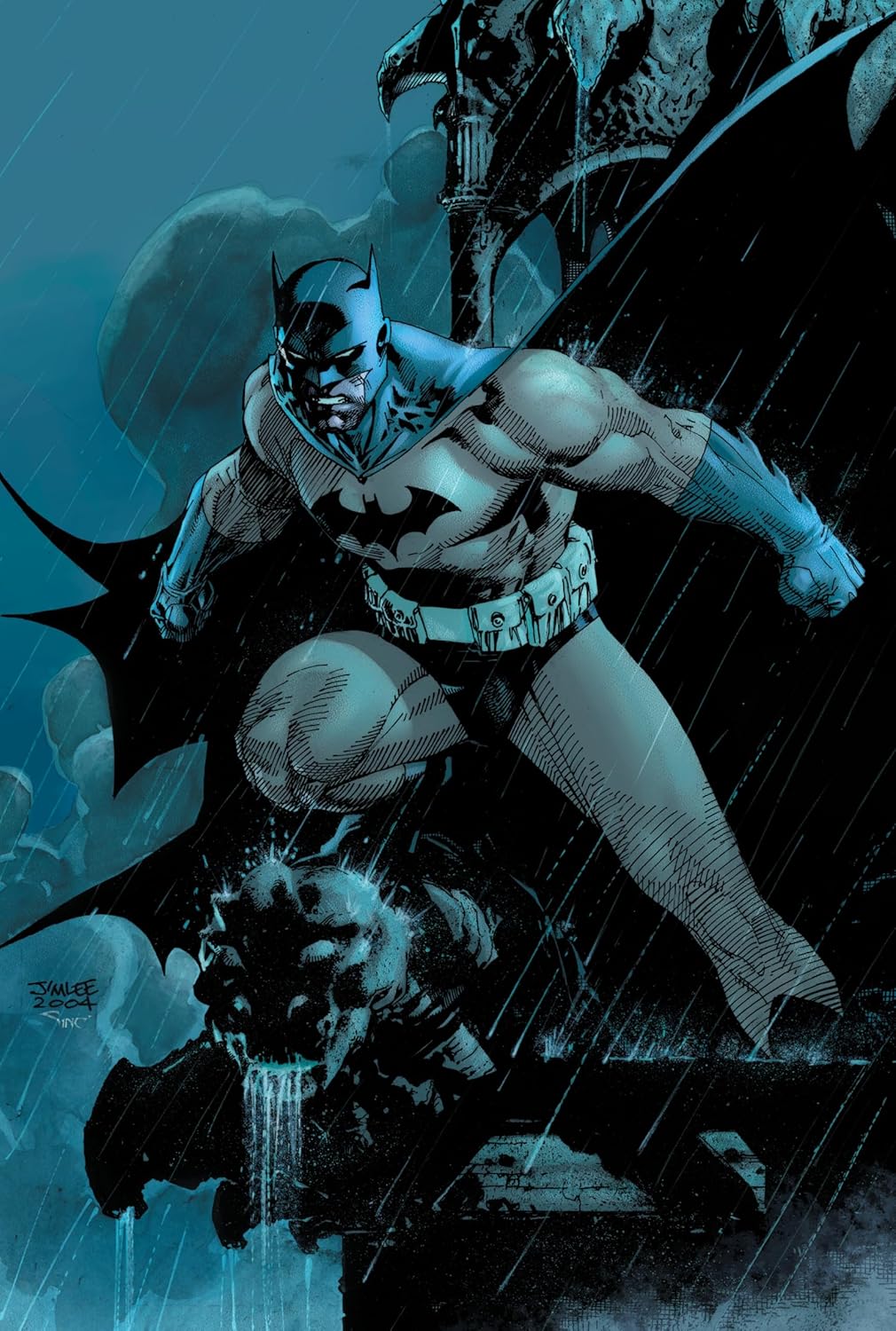
Batman: Hush came up as part of the conversation in this episode.

Superman for All Seasons came up as part of the conversation in this episode.

Spider-Man: Blue came up as part of the conversation in this episode.

Daredevil: Yellow came up as part of the conversation in this episode.
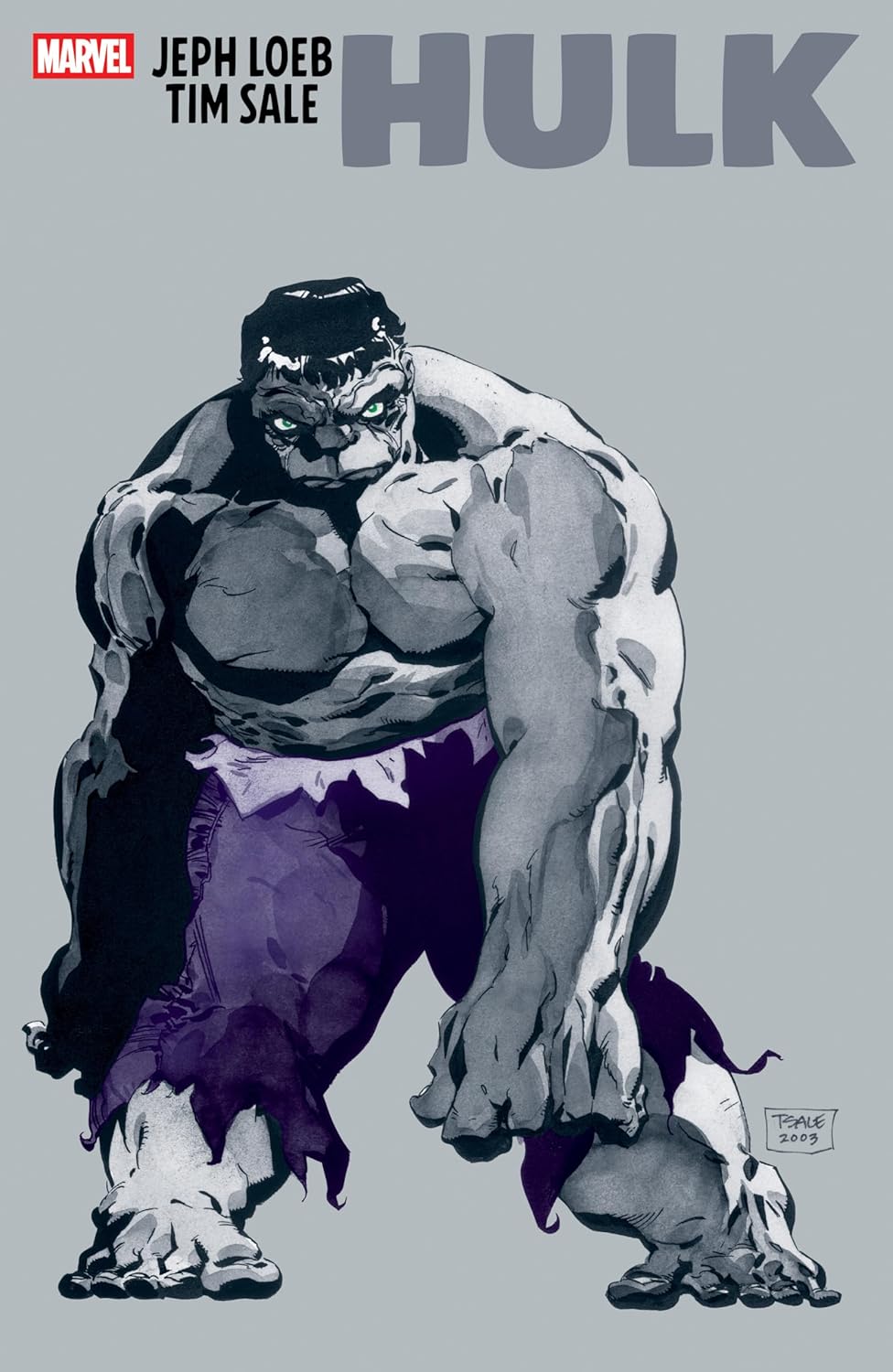
Hulk: Gray came up as part of the conversation in this episode.
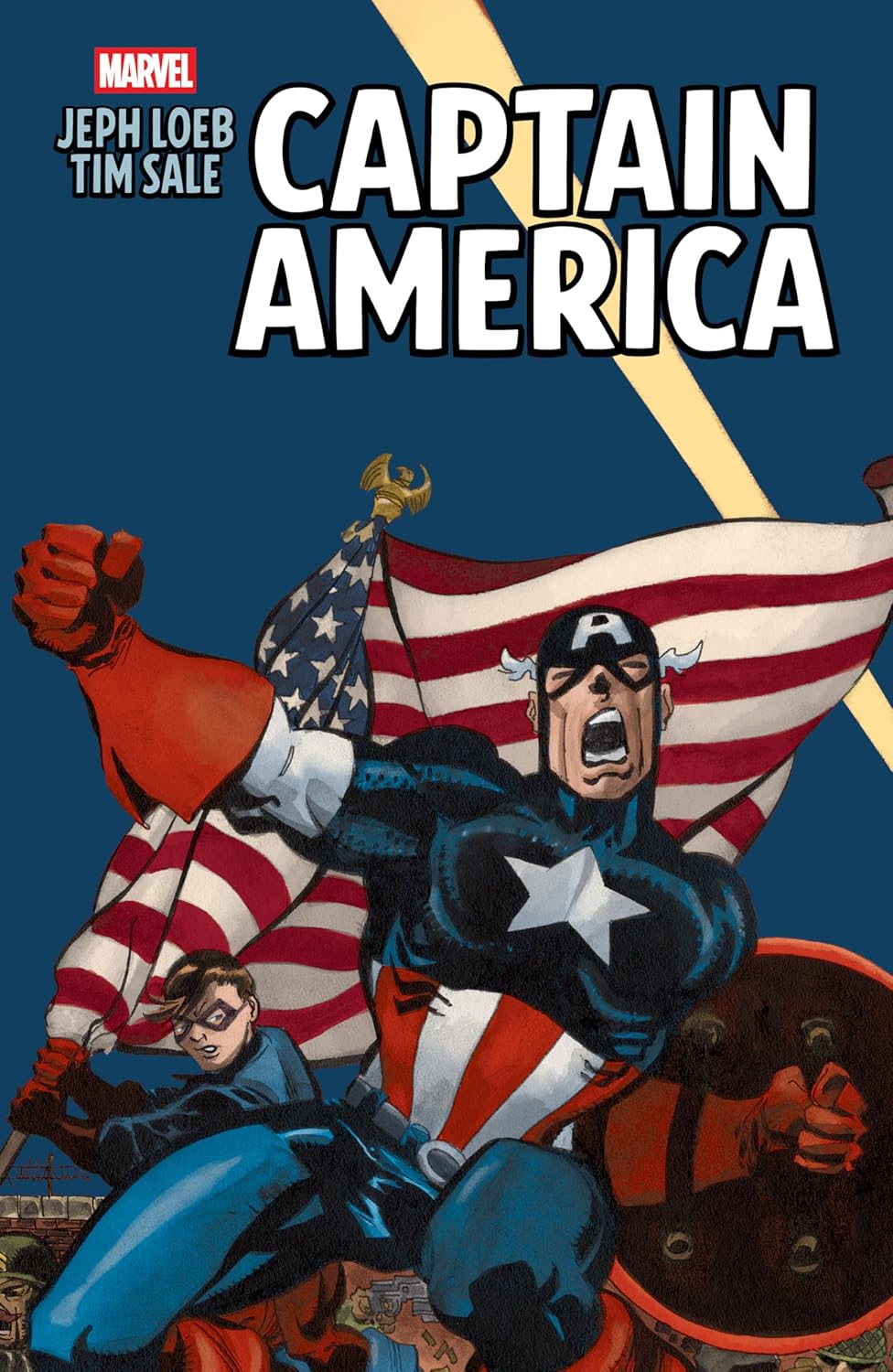
Captain America: White came up as part of the conversation in this episode.
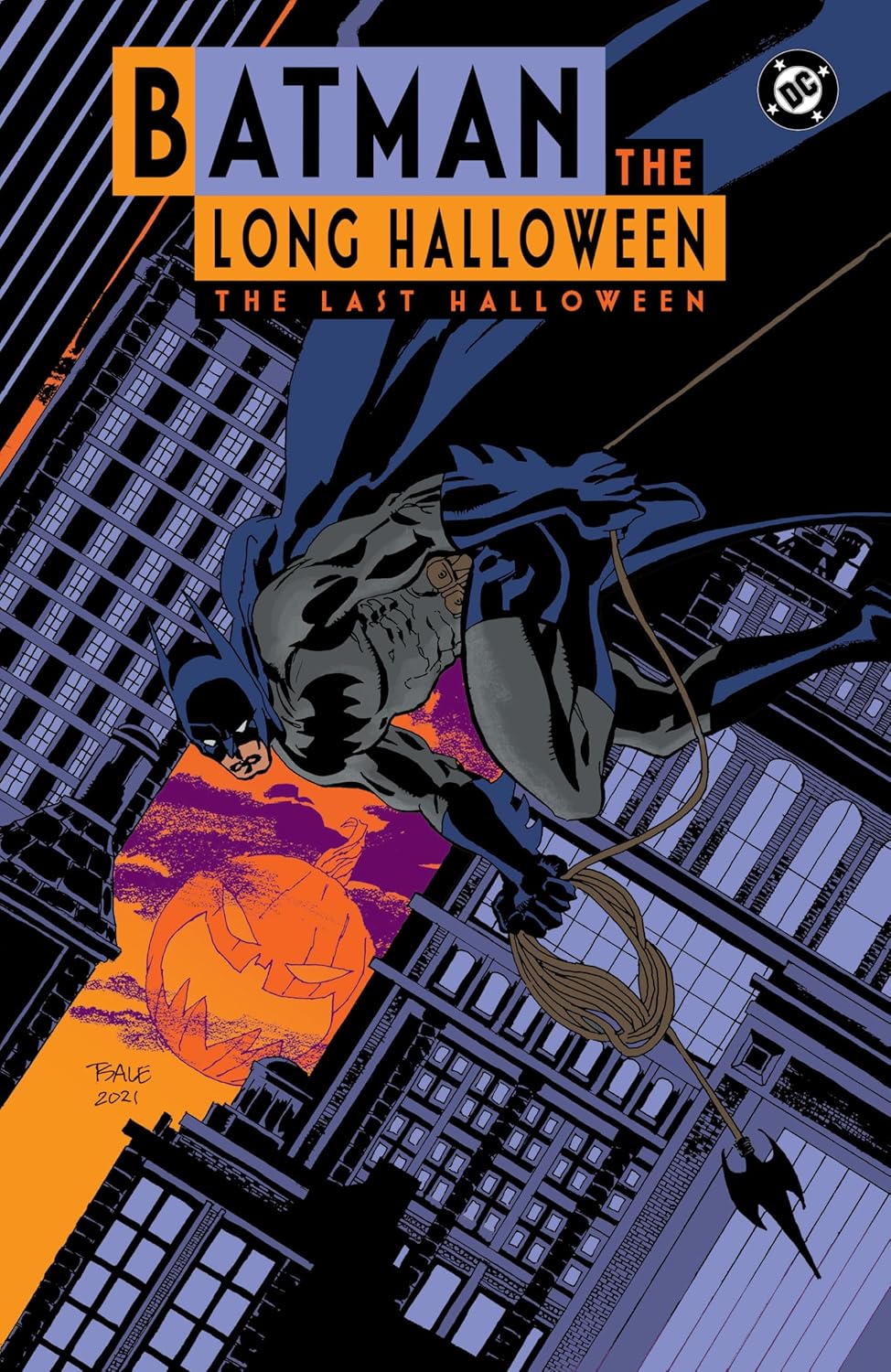
Batman: The Last Halloween came up as part of the conversation in this episode.

Batman H2SH came up as part of the conversation in this episode.

X-Men: Age of Apocalypse came up as part of the conversation in this episode.

Wolverine/Gambit: Victims came up as part of the conversation in this episode.

Batman/Spirit came up as part of the conversation in this episode.

Catwoman: When in Rome came up as part of the conversation in this episode.
Loeb came to comics after an early Hollywood screenwriting career that included Teen Wolf and Commando. When he quit a Flash movie project he could not crack, DC publisher Jenette Kahn invited him to try writing comics instead, which led to Challengers of the Unknown and his first work with Tim Sale.
Loeb says every artist changes the story because every artist brings different strengths to the page. He would not write the same Batman story for Tim Sale, Jim Lee, or Ed McGuinness, because each one is effectively a different actor playing the role.
Not exactly. Loeb explains that DC editorial politics initially treated The Long Halloween as outside continuity because it ran in its own title, but that changed once Christopher Nolan cited it as a major influence on Batman Begins and The Dark Knight.
Loeb says the color books were done with Tim Sale and for Tim Sale. Even if another artist drew in a similar style, he does not believe it would be the same project or carry the same emotional meaning.
Cleaned transcript below. Editorial section headings and quote callouts have been added for readability.
Opening cold open / commercial condensed: A short pre-show riff, Drew’s recorded apology for missing the live show, and the Deadly Grounds sponsor read run before the main conversation starts.
Kari Sanders [00:04:32]: Yes, unfortunately today we do not have Leo. However, happy 2026 everybody from Splash Pages! We are so excited. Happy Saturday. We are getting in early so that we can kick off the year with an amazing guest. We have got ourselves booked until May — we have so many great guests coming for you to see, but today we’re going to focus on a great way to start off the year. Jar, how’s it going?
Jar Jar Jeremy [00:05:04]: Ditto everything you just said, Kari. Happy 2026, everybody. I’m really excited. Not to take up too much time, let’s dive in and talk to Justin and get on to Drew, then bring on our guest.
Justin Cooper [00:05:20]: Yeah, I am excited to be here. I wore my Batman shirt. Normally I’m here to talk about Teenage Mutant Ninja Turtles, but today I am here to talk about Batman and Daredevil and Age of Apocalypse and Catwoman.
Jeph Loeb [00:05:31]: I’m so excited.
Drew Mollo [00:05:34]: Hey, everybody. It’s a new year, and we thought, what better way to start than with one of the best. And he’s here. I had the absolute pleasure of meeting him at New York Comic-Con, where I 100% fanboyed — but not to the point where security was called. He is an absolute legend. There is no doubt in my mind that you’ve read one of his stories in some form or another: Long Halloween, Catwoman: When in Rome, Dark Victory, Haunted Knight, Superman for All Seasons, the Marvel Color Series — Hulk: Gray, Daredevil: Yellow, Spider-Man: Blue, Captain America: White — all of that, plus so much more. Batman: Hush, Superman/Batman, the list goes on and on. I’m not his wiki, so I’m gonna let him talk about some of that. So everybody, 2026, big spot — please welcome, the one, the only, native of Connecticut, coming to us from Pacific Standard Time — Jeph Loeb.
Jeph Loeb [00:06:34]: Hey, gang, welcome. It’s so funny when I hear “native of Connecticut” because I spent most of my childhood in New York, but yes, I was born in Connecticut. And yes, I was responsible for Stamford, Connecticut getting blown up in Civil War. Well, Mark Millar actually was — they just said, “Can we pick a city?” and I said, “Well, I was born in Stamford.” I have to point out, you guys clearly spent your entire budget on those opening credits.
Justin Cooper [00:07:12]: Did you count how many yearbooks?
Jeph Loeb [00:07:15]: If they could just send a donation to keep Splash Pages going — because they really spent all their money on the opening credits.
Jar Jar Jeremy [00:07:25]: We need to get a GoFundMe going.
Jeph Loeb [00:07:27]: That’s a good idea.
Jar Jar Jeremy [00:07:28]: Send us to San Diego.
Drew Mollo [00:07:30]: Yeah, it’s a go-graveyard, so… well, Jeff, I just need to say again — it was so great meeting you in New York. I’ve been a huge fan for years. And it was funny because at the same time, right behind me, someone was masterfully cosplaying as Hush. I was like, I’m in a fanboy sandwich.
Jeph Loeb [00:08:02]: When you see something you created come to life — I’m so grateful for any cosplayer who takes the time to cover themselves in red to be a Red Hulk or a Red She-Hulk. And Hush is not easy either because I’ve actually done the Hush — you spend a good half hour in bandages, and the breathing… yes, it’s challenging.
Drew Mollo [00:08:41]: He even had the jade pendant from Tommy’s mother. I was like, you win. You’ve got to give props for props.
Jar Jar Jeremy [00:08:56]: Appreciate the trench coat — being able to find that and make it look good.
Jeph Loeb [00:09:01]: Oh yeah, he’d been perfecting it for a while. That was like version two.
Drew Mollo [00:09:26]: Well, Jeff, starting at the beginning — I was looking up your origin story, and I know you were collecting comics since the mid-’70s. But at — I might be saying this wrong — Brandeis University, right?
Jeph Loeb [00:09:59]: Actually I was in high school, not college, when that happened.
Drew Mollo [00:10:03]: Right — Elliott S! Maggin.
Jeph Loeb [00:10:06]: Yes, Maggin.
Drew Mollo [00:10:07]: You met him and suggested a story concept that would eventually be —
Jeph Loeb [00:10:19]: This is incredibly embarrassing — mostly to Elliott, who I consider a mentor and a dear friend, so don’t write in. So: I’m maybe a teenager, and Elliott is maybe early college-age. My stepfather knows somebody at the college. And somehow this person says, “Do you know who Elliott S! Maggin is?” I’m like, “Yes, of course. How do you even know that name?” She says, “Would you like me to invite him over for dinner?” Secretly, the only reason I want to meet Elliott Maggin is because he knows Neal Adams. All I want to do is ask him questions about Neal Adams. She figures that out in the first five minutes of dinner. But anyway — by the end of the evening, he says to me, “Have you ever thought about writing a comic?” I go, “I’m a kid, like, no.” And then — I don’t know if you know the story of Elliott, but for his thesis he wrote What Can One Man Do? — which is probably one of the best Green Arrow stories ever, and sort of set Green Arrow on the course that became Hard-Traveling Heroes. It’s an eleven-page story that Neal Adams drew, and it’s incredibly beautiful. He tells me: “I wrote that without really knowing how to write a comic book. You should write one.” So at the age of thirteen or fourteen, I wrote this thing. Whatever Elliott’s story’s title was — Must There Be a Superman? — mine was called Why Must There Be a Superman? It had the Guardians of the Universe, and it had this general concept that the existence of Superman somehow kept humans from being all that they could be. Then it veered off horribly, and I absolutely, one hundred percent took the ending of Spider-Man #100 and made it the ending of my comic. Elliot wrote me back. First of all, the fact that he read it — I was incredibly grateful. But he wrote me back and said: “Listen, you can steal from movies, you can steal from plays, you can steal from novels. Do not ever, ever, ever steal from comics.” Okay — I take this as a hard, fast lesson. Years go by, and I’m collecting comics, and all of a sudden Must There Be a Superman? comes out. And I read it and think — I wonder if Elliott even remembers that I had sent him that script. Cut to: I’m in LA, Elliott’s in LA, he calls me. We go out for lunch, and next door to the restaurant is a comic store called Forbidden Planet in Sherman Oaks. We go in, and he starts flipping through the bins and pulls out that comic. Takes it out and shows it to me. He goes: “You know, I always thought this was some of my best writing.” And I thought he was teasing me. So I said, “Yeah — that’s why I wondered why you ripped me off.” He goes, “What are you talking about?” And then I tell him the story I just told you. I have never, in my entire life, seen anyone turn that ashen white. We go to lunch, and through the whole meal he’s just moving food around his plate. He can’t eat, he can’t talk. I’m like, “What’s going on?” He goes, “I just — I can’t believe I did that. Of course I remember your script. But I also remember I was in Julius Schwartz’s office, I was pitching ideas, and I just… kind of had this idea about Superman and the Guardians, and he loved it. So I wrote it.” And I was like, “It’s fine, it’s great — you’re my mentor, I’m flattered.” And he was like, “No, it’s terrible, I have to do something about it.” Cut to: Mark Waid asks him to write the foreword to the Kingdom Come hardcover. I get a copy of it, and if you go and read it — it’s like four pages long, three pages of which are an apology to me. It has nothing to do with Kingdom Come. He literally says: “I have to say something now about Jeph. You all know Jeph.” And then he tells this story. And why Mark didn’t say, “You have to rewrite all of this — this has nothing to do with Kingdom Come” — but it’s there. It’s in that foreword.
Drew Mollo [00:16:21]: Thank you for sharing that. So then, segueing into it — you’re working in comics, and you do Challengers of the Unknown…
Jeph Loeb [00:16:45]: I should say I worked into it backwards. I started in the movie business. I was very lucky — the first two things I wrote were Teen Wolf with Michael J. Fox and Commando with Arnold Schwarzenegger. Twenty-three years old, thinking this is a snap. And I still go back in time and smack myself, because I spent the next twenty years trying to live up to that. I wrote some other movies, but that’s kind of where I was. Then I got asked to write a Flash movie. My friend Stan Brooks worked for Jon Peters and Peter Guber — they produced the Michael Keaton/Tim Burton Batman movies. I had a deal at Warner Bros. at the time. I got a phone call from Stan, who put me on with Jon and Peter. They had this idea: they wanted to do another DC character, and Warner Bros. would not let them do Superman. So they wanted to make a Flash movie — The Fastest Man Alive. They bring me in and say, “So you kind of know something about comics?” I go, “Yeah.” “The Flash?” I said, “Yeah — not my favorite character. He runs fast.” This is long before the Speed Force, long before all the genius that Mark Waid and Geoff Johns brought to the character. So they hire me to write this movie. And secretly, what the reason I got hired was they wanted Michael J. Fox for it — kind of a lighthearted but also serious thing, and we’d done Teen Wolf together. They commissioned this piece, and I have somewhere in my garage — people ask for a copy all the time, I couldn’t find it if I wanted to — a piece that Carmine Infantino drew of Michael J. Fox. A brown-haired kid, Carmine drew, starting in his street clothes, changing, the ring coming out of his finger, and then he becomes the Flash and runs off. It’s maybe eighteen inches long. And it was amazing. I went home and spent the better part of two months trying to figure this movie out. And I did something I never did in twenty years of writing movies — I quit. I went back and said, “I’m sorry, I just don’t get it. He just runs. Who’s he going to fight?” Because anybody he fights, even with a great rogues’ gallery — you didn’t pay me to write the rogues’ gallery, you paid me to write a story about the Flash. And I always start from: who’s the guy inside the mask? As Stan Lee said, if you care about the human being, you’ll care about him when he’s running around on rooftops. I just couldn’t figure out who Barry was. He was just a scientist who had lightning strike him. So yes, I’m an idiot — I quit. Out of that, Jenette Kahn, who was then the publisher at DC, called me and said, “Look, if you’re not going to write a movie for us, would you write a comic book?” And I was like — this is like Santa showing up in July with an American Express card and saying you can get anything you want. I said, “I don’t know anything about writing a comic book, but absolutely — let’s do it.” So I had a meeting with Dick Giordano. He came out to California, and he said, “So you want to write a comic? Who do you want to write?” I said, “I want to write Superman.” He said, “We have people who write Superman.” I said, “Okay, what about Batman?” “No.” “Justice League?” “No.” “Okay — why don’t you tell me what’s available?” He said, “I have a list, alphabetical order.” And so we go through it: Aquaman — no. Adam Strange — no. We get to the B’s — you have no idea how many Batman books there are. Batman Family, Batman Adventures, Batgirl, Batman, Batman in Detective — and he’s going, “Nope, nope, nope, nope, nope.” We go through Bat-Lash, we go through everything. We get through the C’s, the D’s. Finally I go: Challengers of the Unknown — which I’d been collecting comics since I was about ten years old and had never heard of. And there’s a long pause. Dick goes, “Well, we haven’t published it in about ten years. Sure, you can do Challengers of the Unknown — we don’t have anybody interested in that.” Three years later, I’m in a comic book store, and Steve Grant comes up to me and says, “Hey, I was going to do Challengers of the Unknown and they took the book away from me, you’re a jerk.” And I was like, “I’m sorry, I don’t even know you.” But I got to meet Tim Sale, so I win. That’s how it all started. Challengers of the Unknown was the first thing I did, and I tortured poor Timmy — why he ever asked to work with me again is one of life’s mysteries.
Drew Mollo [00:25:21]: I got to meet Tim a few times. He was just the nicest person. I would rave about the work you two did together — Long Halloween, Dark Victory, the Marvel Color Series — and he was always so gracious. It was amazing.
Jeph Loeb [00:25:53]: What I like to say about Timmy is — much like Superman, he taught us how to be the best that we could be. All you had to do was look at his work. And look, he could get cranky — we all can — but for the most part he was my hero, and I adored him, and he was my brother and my partner. And it’s really terrible that he had to leave us.
Justin Cooper [00:26:22]: I could talk for fifteen or twenty minutes just about his design of the Scarecrow for Dark Victory.
Jeph Loeb [00:26:33]: I’ll give you the shortcut version. In the 1950s there was a British serial called The Scarecrow — which was just a Zorro ripoff, so they can sue themselves. Tim loved that design, and he said, “Can we make the Scarecrow look like that?” And Archie Goodwin — one of the best, not only one of the best writers in comics but undeniably the best editor, because he believed in the very best thing an editor can do: hire the best people you can and let them do their job — Archie didn’t say a word. So we drew Scarecrow that way, and that’s how we always drew him. Also, when I do doodles on covers for remarks, that’s one I can actually do — it’s just a triangle. I can do that.
Drew Mollo [00:28:00]: And what I also love about a lot of your work is that I could relate to it because of the movie and pop culture references. I’m the person who always references a line from something. I’m the Mark Gruenwald of this group — when they need fact-checking, they call me. And then I can never answer it in one sentence. It’s all speech bubbles everywhere. Very Brian Michael Bendis. And the references in your work — like the Joker quoting Chinatown while shooting up the place, or in Haunted Knight: “I got stung by a bee.” “What’d you do?” “I bit him back.” And it’s like — why? “Alfred likes old movies.” I was like, good Lord, I love this book.
Jeph Loeb [00:29:32]: I take as much flack as I do love for it. People go, “Long Halloween is just The Godfather — it’s the same movie.” And I’m like: it has the same opening, and that’s called an homage. But I don’t think there’s anybody named Batman running around Gotham. I do it on purpose. I think people should know I do it on purpose — because I love movies, not because I’m ripping them off. I wrote movies for twenty years. I worked in television for twenty years. And when I see somebody else’s work that I really admire, I don’t quote bad things. I quote things you’re supposed to recognize. And if you don’t, go watch more movies.
Kari Sanders [00:30:45]: One of my favorites was Lex Luthor’s reference to “I’ve grown accustomed to her face” about Gotham. I was like, oh my God, you made it so beautiful. It’s Lex saying it, so he’s kind of a piece of work, but it builds the character — he’s built this city, and it was just: oh, he does have a heart somewhere in that shriveled little chest.
Jeph Loeb [00:31:13]: The best villains do. And so every now and then you show that they have a heart, and then it gets really complicated — because your main character is going to come crashing down on them.
Justin Cooper [00:31:27]: That reminds me of that Wolverine and Gambit crossover with Arcade. I know that one.
Jeph Loeb [00:31:33]: Yeah, Arcade had a really horrible two weeks, but go ahead. I disagree.
Drew Mollo [00:31:42]: We always try to pull from the off-the-beaten-path books because, like, we always make the same joke about how Mark Waid is one day away from saying, “Stop asking me about Alex Ross.” Same thing — “What’s Jim Lee like?” He’s funny. He draws beautiful work. So we try to have you talk about those. But yeah, Wolverine/Gambit: Victims — Kari is a big London history fan, so that was my pitch. First line talks about Jack the Ripper. She was in.
Jeph Loeb [00:32:27]: I’m just happy it had Yukio in it.
Justin Cooper [00:32:29]: Are you kidding me? Yes!
Jeph Loeb [00:32:31]: I do my homework. I try to find things that tie into the then-current continuity. Continuity is not my friend — I’m the worst about it. I’ve said publicly, and have been chided for it: as far as I know, Jimmy Olsen did not become Robin, and everything else is cream cheese — you can just do whatever you want. So I’ve said publicly: when I do my one Jimmy Olsen was Robin story, that will be the last comic I write. That’s how you’ll know I’ve lost it. Elvis has left the building.
Drew Mollo [00:33:41]: One of the things I wanted to bring up — you’ve seen a lot of your work adapted in some form. Batman Begins cited Long Halloween as an inspiration. Scenes from Superman for All Seasons were referenced in Superman and Lois. Batman and Superman got turned into animated films.
Jeph Loeb [00:34:09]: Yeah, and Man of Steel referenced Superman for All Seasons as well.
Drew Mollo [00:34:12]: So what’s that like? Do you find out when you suddenly get a check for something, or do they tell you?
Jeph Loeb [00:34:32]: Okay, check yourself. You spent more on your opening credits than I’ve ever seen from anything that’s been adapted. You sign what’s called a work-for-hire contract. I understand what a work-for-hire is. There is a benefit: whenever a Batman movie comes out, all the Batman stories I’ve written go to the front page on Amazon and sell a lot more — and that I get a piece of. So the short answer is: it’s bittersweet. It’s an honor — particularly when people like Christopher Nolan, Sir Christopher Nolan, on his own, without me asking, wrote the foreword for The Long Halloween Absolute Edition. And with David Goyer, who wrote the films with him — when he says “I couldn’t have made any of the Batman movies without Jeph Loeb and Tim Sale,” I’m like: this is Chris Nolan, you don’t have to say my name ever. And Matt Reeves is a friend, someone I knew long before The Batman. When I watched the Robert Pattinson version, there were whole scenes — they were like my dialogue, nearly verbatim. There’s one thing to homage me, it’s another thing to adapt me. But I’m such a huge fan of that film that all I could do was call DC and go, “Hey.” And they go, “Work for hire.” And I go, “Okay — well, if you feel like sending a bonus check at the end of the year, I won’t say no.” Still waiting. On the other side: DC is not foolish. If James Gunn is going to make his Superman movie and says the two main things he drew from were All-Star Superman and Superman for All Seasons, then when I go to DC and say I’d like to do a Superman story, nobody there is going to say no. And Harrison Ford plays the Red Hulk. That’s a mic-drop moment in my life — Han Solo, Indiana Jones, and the Red Hulk. Do I wish it was a better movie and he was in it more? Yes. Do I wish Captain America spent an hour fighting the Red Hulk? Yes. But still — come on. And I’ll say it here: I hope Avengers: Doomsday is the biggest movie ever made. Marvel deserves a hit after all this time. But if they don’t take ten minutes out of that film and have Robert Downey Jr. — in some alternate multiverse version — show up and fight or get beaten by Doctor Doom, they’re leaving a billion dollars on the table. I mean, bring Iron Man back, let us cry, and then you can kill him again. Best part. Those guys who wrote the script and the Russo brothers directing it are really smart guys.
Drew Mollo [00:40:33]: Going back to Last Halloween — the Rob Liefeld cover.
Jeph Loeb [00:40:52]: Asking Rob raised a few eyebrows over at DC, because he’d never done Batman. And I will tell everybody: that cover sold out instantly. And you have to understand — there were people like Arthur Adams and Klaus Janson and Adam Hughes, all these artists who came on because they loved Timmy. And Rob did it because he loved Timmy. They just couldn’t really imagine that Rob’s cover was going to be the highest-selling of the entire series. But that’s just the power of Rob. He has a loyal fan base — justifiably so, I think. I’ve been on his team all the way back to Heroes Born. And if you’re a good dad, you’re my pal. Are you a good dad? Then I’ll work with you.
Drew Mollo [00:43:59]: Well, you’d be proud to know that Mr. Cooper and Mr. Courtney there are two excellent fathers.
Jar Jar Jeremy [00:44:09]: I can barely draw a pencil.
Jeph Loeb [00:44:20]: And you’re a great guy for bringing that up. I admire that.
I write for the artist. Who else would I write for?
Jeph Loeb, 00:44:36
Jar Jar Jeremy [00:44:24]: I have one more question about Tim Sale, if I could. Did his art ever change the direction of a story?
Jeph Loeb [00:44:36]: Well, let’s start at the beginning. I was asked once: “Who do you write for?” This was in a book called Comic Book Writers on Comic Book Writing — early ’90s — with Grant Morrison, Neil Gaiman, Alan Moore, and me, the schmuck. I had done exactly one comic. The interviewer asked this question and I said, “I’m sorry — I write for the artist. Who else would I write for?” And he goes, “Interesting — nobody else answered that way.” Everybody else said they write for the fans — which, I don’t know how you do that. You can’t write for fans as a collective. I look at four people right now, and I’ll bet you can’t agree on anything. So I said, “I write for the artist.” And Tim would be the artist I write for most specifically. I would not write the same Batman story for Ed McGuinness that I would write for Tim Sale, that I would write for Jim Lee. They’re the same character, but it’s almost like different actors are playing the part. With Tim — aside from the fact that he could draw anything — Tim loved noir and heavy black ink. He used to call it “inky-dinky-doo.” He would send me pencils that a lot of people would look at and go, “Is this a layout?” And I would say, “No — when you work with Tim, it comes alive in the ink.” When you work with Jim, it comes alive in the pencil. With Ed, it’s somewhere in between — it’s well-drawn, and when the ink goes on it, it holds. What a lot of people don’t know is that Tim was also an exceptional storyteller — not in the sense that he would suggest story beats, but if I said, “I want to do a scene where Harvey and Gilda are having dinner together,” he knew exactly where to put the camera, how it should be lit, what the house should look like. Those were the things he enjoyed. He much more enjoyed drawing backgrounds than figures. If you look at a Tim Sale page, Richard Starkings — who I’ve been lucky enough to have as my letterer and designer on most of what I do — can tell you that Tim would think carefully about the wallpaper, the number of chairs in a room. He would think about what was on the desk. Tim believed that you could tell more about a person from what was on their desk than from anything you could tell in the story. If you go and flip through The Long Halloween and look at Gordon’s desk — it’s amazing how much detail and thought Tim put into that. He thought about the wallpaper. He thought about whether there were three chairs or two. When you go to a movie, unless you’re a set designer, you don’t stop and go, “Wow, that’s a really interesting desk.” You go, “Brad Pitt’s in the scene.” That’s part of what made Tim so magical. He made everything richer. It had a feeling. And the page — it had weight. So yes, in that way his work absolutely affected the stories. But it also spoiled me. Because when I work with Jim and I say, “Okay, Batman’s in a tunnel and all I want to see are his eyes” — of course Jim will draw the entire tunnel: tracks on the ground, bricks in the wall, lighting above, Batman visible down to the quarter-inch in shadow, arm muscular and clear. Whereas Tim would just black it all out, put in two little diamonds, and move on with the page. I try to make every script specific to the artist. And it frustrates me when I see writers writing the same for every artist — because they’re really just writing for themselves. So when I work with someone new, I call them, I go through the script, and I say: if you have questions about any page, any panel — let’s talk about it. Because I’ll change anything. I just want to know that you get what’s in my head. And then when you bring it to life, it’ll be new. With X-Men: Age of Apocalypse — I brought this idea to Tom Brevoort. He said, “Who do you want to draw?” I said, “Honestly, I really want Joe Madureira, but he makes a billion dollars doing video games and I don’t think he’s coming back. Maybe he’ll do covers.” And we went back and forth. Then I met Simone Di Meo, started looking at his work, and I thought — you know what, I haven’t worked with somebody I’ve never worked with in a long time. Not counting Last Halloween, because that was a tribute to Tim — I could say to those ten artists, “Just do it in your own style, keep Tim in mind,” and they’d go, “Got it.” And they all came to the game. Everybody understood. And Becky Cloonan — I didn’t know Becky at all, and when she started turning in pages I was like, this is unbelievable. I would work with her again in a heartbeat. That was Tim’s final gift to me — he left me with this group. He left me with ten new creative friendships. And I just got the collection. Mark Chiarello said: “Please think of Tim somewhere in a mythical Smallville, sitting on Pa Kent’s porch in the rocking chair, flipping through this hardcover, and he’s just got a smile on his face — because every single page is by an artist that he loved.” Because Tim didn’t like looking at his own work. He liked looking at other people’s work and learning from it. The last gift he gave me was those ten new friends. And for those who are asking: yes, that’s the end of that series. And will I do another color book? No. The color books were done with Tim, for Tim. Even if someone drew exactly like Tim, it’s not going to be the same.
Justin Cooper [00:56:42]: So we’ll never see a Magneto Magenta?
Jeph Loeb [00:56:45]: No. Actually, funny enough — at one point they called and said, “Would you guys do Magneto: Red?” And I was like, no. But the thing Timmy and I were going to do — after Last Halloween — was Iron Man: Old. Because in Hulk: Gray, Iron Man’s running around in that big bulky armor, which just cracked me up. I said to Tim, “It’s early — draw him like a robot.” And the Hulk is just going to call him a robot. He doesn’t understand there’s a person in there. Because one of the things about that costume is that it completely takes away all of Tony’s personality. It’s just a bulky machine. So I thought: let’s do a story about what it’s like growing up always in your father’s shadow, and how Tony was going to deal with that. But now — that’s a story for somebody else to tell.
Drew Mollo [00:58:12]: Batman H2SH. And yes, I know — there’s a lot of criticism out there. But what would you like to say about where the story is?
Jeph Loeb [00:58:28]: You’ve read five issues of a twelve-part story, and all you’re doing is comparing it to something Timmy and I wrote and drew twenty-five years ago. This is a different story. Just look at the beauty of what Jim is drawing. And look at the fact that Jim has a full-time job as publisher of DC Comics. He draws covers and short stories and anything the company needs. He called me once and said, “Sorry I’m a little late — I was doing this thing.” He goes, “Did you see that piece I had to do for some crypto thing? I spent three days on it.” And he has nine kids. And he’s the greatest dad in the world. The fact that we have five issues, most of the sets done — that’s astonishing to me. And I know because I’ve been in this business a long time: when the story’s done, all the people who were saying “What is this?” a year ago are going to go, “Oh. There was a plan. Okay.” There was actually a list of the worst stories of 2025 going around, and we made it — number three. And number two was “Why does Tom King still work?” I thought: if you don’t think Tom King can write and you think Hush 2 stinks, I’m proud to be on that list.
Jeph Loeb [01:01:10]: I will tell you: when you read issue six, it ends on a cliffhanger. And it’s going to be a while before you see issue seven — because Jim is now adamant that we batch the remaining issues so that no one can complain about lateness. Which hurts him, honestly — when people write that the book is late, it actually puts him in a bad place. And look: if there were twenty years between a Michelangelo painting and another Michelangelo painting, I’m waiting. I don’t complain about it.
Jar Jar Jeremy [01:02:10]: How long have we waited for Spaceballs 2? And we’re finally getting it.
Jeph Loeb [01:02:17]: I just wish Mel Brooks was more involved. But hear, hear.
Long Halloween goes here, Dark Victory goes here, and When in Rome goes here. That’s my continuity.
Jeph Loeb, around 01:05:00
Kari Sanders [01:02:26]: You’ve pretty much answered over half the questions that were posted on Reddit. Someone named Millie K asked: was The Long Halloween meant to be canon at the time of publishing, or more of an Elseworld?
Jeph Loeb [01:03:29]: Here’s what happened. Archie Goodwin was Archie Goodwin — everyone at DC said, “Just get out of his way.” There was a book called Legends of the Dark Knight, which told stories that Archie and I saw as taking place between the pages of stories you already knew. Bane was created in that book. So either it existed or it doesn’t. You’ve got to get over yourself. We did the Halloween series, and there were some things in it that had never been told before, and they don’t quite match up with everything. Look — I’ve now done how many Halloweens? There were three Halloweens before The Long Halloween, then Dark Victory, then Catwoman: When in Rome — which actually takes place during Dark Victory, right. And now The Last Halloween. They all take place in Year One. So you figure it out — it’s not my job. I live in a world where Wolverine was in Madripoor as Patch, was on the moon with the Starjammers, and was in the mansion doing whatever he was doing. One happened on Tuesday, one happened on Thursday, one happened on Saturday. At the time Long Halloween came out, there was political nonsense at DC — internal fiefdoms. The Superman group thought: if I tell a story in the Superman group, that’s canon. If the Batman group tells a Superman story, it’s not. The Batman group said: Long Halloween is not canon because it didn’t take place in Batman — it took place in something called Batman: The Long Halloween, which has its own universe. There are people who still think Batman: Hush took place in its own universe, even though it ran in Batman. But that’s what they want to do with their lives — great, have a nice day. I’m not being dismissive. I’m telling you a story. You can put it in your own continuity wherever you want. What I do is wait for the hardcover and put it on my shelf. Long Halloween goes here, Dark Victory goes here, When in Rome goes here. That’s my continuity. For years people would go, “It’s not continuity — don’t worry about anything in there.” Then Christopher Nolan makes Batman Begins, and suddenly everybody at DC goes, “It’s continuity, it’s continuity!” And now we’re in the middle of doing Last Halloween, which is all built around finding out the truth of Catwoman’s relationship with Carmine Falcone. Which, by the way — the cat’s out of the bag — that’s in Matt Reeves’ The Batman too. So once it’s in the Batman film, I think we’re okay. And then I get a phone call: “Carmine’s alive.” Excuse me? “Yeah — during ’52, they brought him back.” I said: “Do me a favor. He’s dead. Use him. Or call him Edward Falcone, his brother. Make him his clone, make him whatever — just don’t. Why be disrespectful to the original story? If you want Catwoman to have a conversation with Carmine Falcone about their relationship, I guess he’s got to be a ghost or it’s got to be a flashback. She went through the process of mourning the loss of this man. What are we doing?” When I stop and remind myself — as my good friend Marcia Rella tells me often — it’s just comics, kids. Sometimes it’s going to match up, sometimes it won’t. Sometimes just because you didn’t mention Tim Drake doesn’t mean he doesn’t exist. I believe in continuity through omission: as long as I don’t say “This is the only Dick Grayson who exists” — you can work with it. This is one of the things I got in trouble with on Superman for All Seasons. We got a call from an editor: “What are you going to do about Clark playing football?” I said, “Because I think Clark playing football is the stupidest thing in the world.” They said, “It’s in Man of Steel, you’re going to have to deal with it.” I called Tim. Tim said, “There’s no way — I’m not doing it, I’m not drawing it, forget it.” I said, “I’m not asking you to draw it.” And I called the editor back: “If Clark is wearing a letterman’s jacket, does that do it for you?” And he goes, “That would do it.” So in the winter chapter, Clark is sitting on Lana’s porch for no reason at all wearing a letterman’s jacket — which both Tim and I insist he borrowed from another kid. And that’s how you live with yourself.
Drew Mollo [01:14:40]: One of the things I particularly love — the Batman/Spirit crossover with the late, great Darwyn Cooke.
Jeph Loeb [01:14:48]: One hundred percent credit to Darwyn. I was lucky to be along for the ride.
Drew Mollo [01:14:52]: I didn’t really know much about the Spirit going in. But rereading it, that was my introduction to Darwyn. I bought Batman: Ego, then DC: The New Frontier. What was it like working with him on that?
Jeph Loeb [01:15:34]: He knew I loved the Spirit — I actually worked on a Spirit movie for about four and a half minutes before the Frank Miller version. And it’s one of those things where — the Spirit and the Shadow are two non-DC/Marvel characters I could do all day long. Timmy and I spent a lot of time talking about trying to do the Shadow together. I said, “Timmy, I’m not doing a book that sells five copies.” But anyway — Darwyn called, he got as far as “Do you want to—” and I said yes. He said, “I know I want them both in the story.” Here are the things I felt needed to be there: Dolan and Gordon both have daughters, they’re very similar characters who approach things differently. The Spirit always had a kind of goofiness that was fun, while Batman had a darkness. They both had great rogues’ galleries. And then there’s Selina and Ellen Dolan — two of the great women in comics. And then — I think it was Darwyn’s idea, because all my good ideas I give to somebody else — a police commissioner’s ball. They’re all going to show up at some hotel, and we’d do sort of a Marx Brothers movie where everyone’s running around. We did this scene where the heroes go in one door and out another door down the hallway — great in film, tricky in comics, but it worked. And it came out as this wonderful thing because you could see the passion Darwyn put into it.
Drew Mollo [01:18:36]: I had a chance to meet him at a signing — it was near New York Comic-Con, at a comic shop — and I opted not to go. And shortly after, he had his diagnosis, and he passed. And I’m still kicking myself.
If there’s something that you want to say to someone, say it. Because the feeling that you have when they’re gone and you didn’t is far worse than the fact that you never said it.
Jeph Loeb, 01:19:08
Jeph Loeb [01:19:08]: This is the one thing — having lost Michael Turner, Carlos Pacheco, Tim Sale, George Perez, John Cassaday… they’re on my wall. And every time I look at it, it’s the very definition of bittersweet. I loved working with them. People say to me, “What’s your favorite thing you ever wrote?” I go, “I don’t read comics that way.” I read them as memories of what the experience was like to work with that individual. It’s like music — when I hear a song, it immediately transforms me to a time and a place and a person. Not because the song reminds me of her, but because they just go together, right? So I urge everyone listening: if there’s something that you want to say to someone, say it. Because I will tell you, the feeling that you have when they’re gone and you didn’t is far worse than the fact that you never said it. You’re not doing it for them — you’re doing it for yourself. Go find that person at a convention, and take that second to say, “Thank you for the joy you’ve given me.” If you see a creator you’ve always wanted to thank — do it. Because I remember seeing John Cassaday at a small con, just sitting off in a corner doing a sketch, and the line wasn’t around the block like I expected. And we sat for like an hour talking, laughing, going back over everything we’d done together. And then he was gone. And I think about that now and I wonder — was I talking to a ghost? Don’t have that as a chapter of your life. What you guys are doing here on Splash Pages, even without Leo — I love that you do it, and I love that you care about each other. Tell the person next to you that you couldn’t do this without them. Because a year from now you’re still doing it, and you want them to still be there. There’s a book I borrowed a title from once — Our Last Things — and the whole point of it, in about four hundred pages, is simply this: tell people how you feel about them, because tomorrow they could be hit by a bus. You’re not doing it for them. If they’re gone and they never knew how much you cared, you’re the one who’s going to feel it.
Jim and I did Hush as a gateway drug, and now you’re hooked.
Jeph Loeb, 01:25:49
Drew Mollo [01:25:14]: Jeff, I just want to say — Hush and Ultimate Spider-Man by Bendis and Bagley were the two books that brought me back to comics. I’m just really grateful that I got to tell both you and Bendis that. Because without those two books, I wouldn’t be here.
Jeph Loeb [01:25:49]: I appreciate that deeply. But I will tell you — Jim and I did Hush as a gateway drug, and now you’re hooked. And that was the plan. We wanted to make a book that worked for someone who had never read a comic before. And for whatever reason, people walked out of it going, “Oh, I didn’t even know they still made comics.” We’re in a niche business with very loyal people, many of whom are, for whatever reason, aging out of it. I’m really glad that DC decided to make Pocket Digest editions — manga-sized, small enough to go in a backpack — because we now have evidence that younger readers are picking them up. And that’s super cool. Because anytime another generation comes along, we get to keep telling stories.
Justin Cooper [01:32:09]: I’ll be quick. I love Teen Wolf — always a huge fan of Stiles, and I think my love of Stiles is why I love Booster Gold to this day. That sort of schemer I love. I’m super honored to be here talking with you. There’s not a place in this room where I don’t have a work of yours within arm’s reach. Thank you.
Jeph Loeb [01:32:33]: Thank you. And look — I have to thank you, because unless you buy the books, I don’t get work. They’d be more than happy to throw me down a flight of stairs otherwise.
Justin Cooper [01:32:51]: I’m buying Age of Apocalypse and I’m buying Hush 2.
Jeph Loeb [01:32:55]: Good — you’re keeping the water on.
Jeph Loeb [01:33:11]: So Jerry Levine — Stiles from Teen Wolf — I ran into him at some point. He looks exactly the same — there’s a portrait of him dying in an attic somewhere. He says to me: “Not a day goes by.” And then he tells me the most embarrassing story: “I’m at the Western Wall in Jerusalem, and I’m having the most private moment in the world, putting a little prayer between the cracks, and I’m about to start sobbing — and the guy behind me goes, ‘Hey, Stiles.'” And he said, that was just God saying to him: life’s a comedy. Run with it.
Drew Mollo [01:34:18]: Jar, Kari, Justin — anything else?
Jar Jar Jeremy [01:34:20]: Just thank you for being here.
Kari Sanders [01:34:29]: I’d like to give a shoutout to some of the people who asked questions on Reddit — Adam S., Reporter Steven, Noodle X87, Millie K. You pretty much answered all of them. It was remarkable.
Jeph Loeb [01:34:43]: I just hope more than five people watch this. And if you’re watching it, tell somebody. Go find us on YouTube. Kill an hour and a half. And more than anything — don’t let anybody ever tell you that reading comics is stupid. It isn’t. It’s an art form. And on the other side: when you sit down to tell someone that you think they’re the world’s worst human being, it hurts. Maybe that was your intention. But nobody’s coming to your house and telling you that your hobby is dumb. In 2026, let’s try to be nice to each other.
Drew Mollo [01:35:33]: Well, you know what — positivity. We’ll just think of this year as the Batman Ferris wheel and let that make everything feel better.
Kari Sanders [01:35:53]: My mother’s name is Karma. Her two mantras are: life is choices, and — is it true? Is it kind? Is it necessary? Before you say something. If you can’t say anything nice, don’t say anything at all. But if you are going to say something — be honest. Don’t just tear somebody down.
Drew Mollo [01:36:41]: And if it’s Perry White — don’t call him Chief.
Jeph Loeb [01:36:45]: He doesn’t like that. Thank you so much for having me. I love the sound of my own voice, so I at least amused myself. Take care, everybody. Enjoy.