Batman and Robin: Year One
Batman and Robin: Year One came up as part of the conversation in this episode.
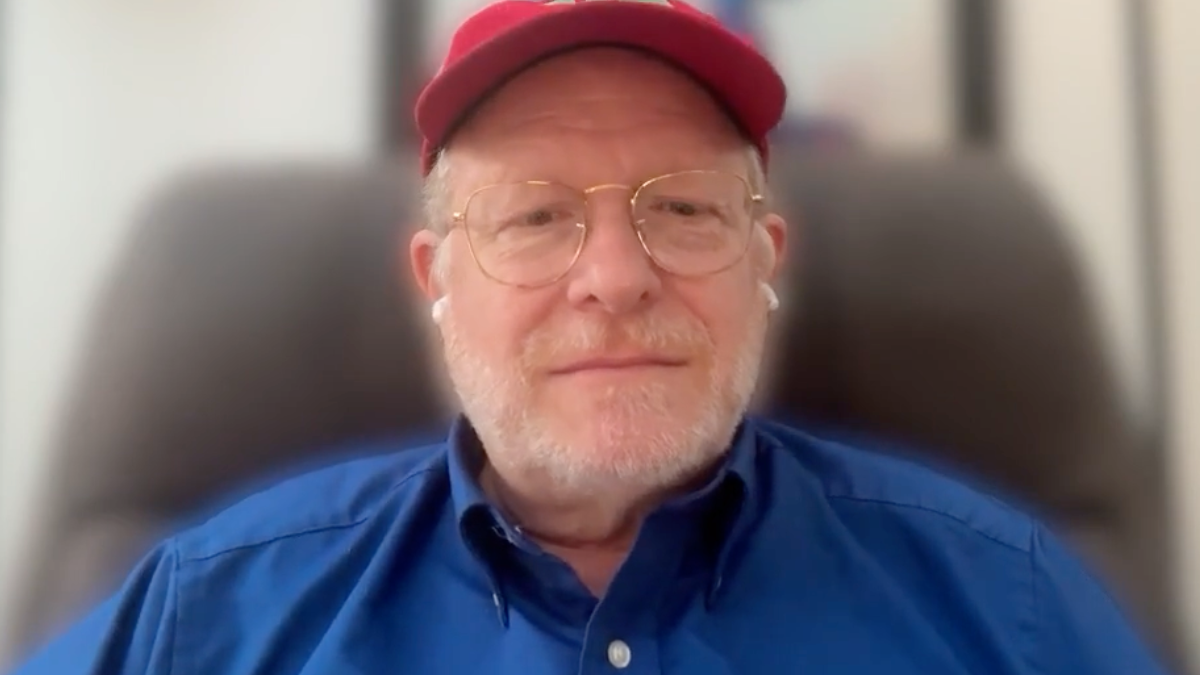
Mark Waid returns to Splash Pages to discuss Batman and Robin: Year One, World's Finest, The New History of the DC Universe, Action Comics, Justice League Unlimited, and Flash: Impulse Control. He explains why DC feels creatively energized right now, why Batman and Superman should always be friends, and how he writes cliffhangers without knowing the way out.
I write all my cliffhangers — and this is the God's honest truth — with no idea how to get out of them. A month from now, that Mark Waid is cursing this Mark Waid.
Mark Waid on DC's Renaissance, Batman & Superman, and Writing Without a Safety Net
Batman and Robin: Year One came up as part of the conversation in this episode.
World's Finest Vol. 1 came up as part of the conversation in this episode.
The New History of the DC Universe came up as part of the conversation in this episode.
Action Comics came up as part of the conversation in this episode.
Superman: Birthright came up as part of the conversation in this episode.
It is a four-issue DC miniseries written by Mark Waid that consolidates and canonizes decades of DC continuity into one official in-universe record.
It is a Year One-style retelling of Bruce Wayne's early relationship with Dick Grayson, emphasizing Bruce's uncertainty and Dick's instinct for teamwork.
It is a Flash story co-written by Mark Waid and Christopher Cantwell in which Bart Allen attempts a reckless time-travel fix and Wally West chases him through the past.
Waid argues in the interview that Batman and Superman work best as genuine friends rather than opposites, and that belief shapes books like World's Finest.
[00:03:29] Hey, hey, happy Wednesday everybody! You're watching Splash Pages. My name is Leo. I'm the monkey behind the keyboard here. We have an incredible show for you as always, and we'll kick it off fast. Carrie, how's it going?
[00:03:40] Hey, it's going great, Leo. Glad to have you back tonight. Hi Dylan, glad to have you with us again tonight. Just wanted to let you know I passed on David Hartman's stuff to Dean and he says thank you very much, he quite enjoyed it. But let's get this show started. Let's go over and see how Jar is doing.
[00:04:01] Jar Jar, hey, it's freaking Wednesday, man. What are we doing here? This is just crazy. All right, hey Dylan and hey everybody else. I was gonna be late, but I made it, so yay me. All right, on to Drew so we can get our guests out here.
[00:04:20] Hi everybody. Um, this is my friend — because I just want Kari not to have a tear. This is someone from my childhood who decided to make an appearance. So yep, a little Spud. I only show that because we're getting close to Halloween, as Kari knows. But we have an absolutely fantastic guest. He's been on the show before and we are just thrilled that he said yes to coming back — thank you so much. If you're reading a lot of DC right now, you'll definitely know his name. He's an absolute legend whose work you can find on Batman and Robin: Year One, The World's Finest, The New History of the DC Universe, Action Comics. He's also working on a tie-in for DC: Absolute Power called Impulse Control. There's a smattering of other things. So everybody — the guy who puts the W in Wednesdays — Mr. Mark Waid.
[00:06:42] If you were one of the creators that got asked to come on set for Superman — James Gunn's Superman — and we all thoroughly enjoyed the movie. So as someone who's contributed to the Man of Steel, what was that like? Not just being there, but being amongst — I don't want to say the — but kind of these comic book legends, which you are considered one of. What was all that like? The invite, being there, and then the whole thing?
[00:07:01] It would have been great. It would have been — you were talking about the set visit and stuff, that thing. Yeah, I wasn't there. I had a convention to go to, so I couldn't make it. And so all these pictures are circulating the next couple of days, and I'm looking at all my friends, and I felt like a kid with strep throat on a snow day — watching everybody else frolic and have a blast. I'm at home just kind of — I mean, and worse, it's a convention where no one showed up. It was in Sweden. Oh, they don't care anything about superheroes. I think I signed like four comics in three days, but everybody else had a great time.
Luckily, two weeks later, I got the call to visit the Fantastic Four set in London, and Marvel would take me over there. I was on my way to a convention. I couldn't make that one either.
[00:07:52] Oh my God, look at you though, for actually making your conventions and everything, because I know a few people that probably would have been like — set visit vs. Sweden convention — I'm going to the set.
[00:08:10] Yeah, but again, a commitment's a commitment, you know. I've probably ducked out on two conventions my entire career, almost always because of illness. And I just don't like the idea of people showing up with six omnibuses in their backpack and I'm not there.
[00:08:32] Well, I am so sorry — I didn't realize that you weren't there.
Mark Waid: Oh, that's fine. I like telling that story. It's a good story to tell. You set me up nicely.
Apparently at the Superman thing, every single creator who got off the plane was like, "Where's Mark? He's got to be here, right?" So I always say I was missed, if nothing else.
And then Matt Fraction took me aside after the Fantastic Four one and said, "You're really gonna love this." And he was absolutely right. Like, no notes. That movie was terrific. Both of them were. But I really — there was much more to get wrong with Fantastic Four, and they didn't. I think they hit it out of the park.
[00:09:34] Yeah, I absolutely have to agree on that. Like, I saw Superman the day after I lost my job, and I'm just an emotional wreck, and that movie just hyped me right back up. I was like, you know what, it's gonna be okay. And the Fantastic Four, just walking in, I was like, wow. The only ones we had were the Roger Corman one, which I think is now more of a pop culture reference than it is actually a movie. And then the other two. But this one, I was like, wow, this is just hitting all the notes.
[00:10:18] Both of them. And I think the secret to their success — and I think it's fortuitous they both stumbled onto the formula. In every other superhero movie, as a general rule, the superhero is the fantastic element in an otherwise fairly familiar world. And these films flipped the script. Both of the movies did. Like, this is our crazy-ass world. Come in here where there's flying robots, and there's Herbie, and there's cosmic rays, and there's Supergirl, and there's Green Lantern. I love that. You're coming into a world that's already built, and I don't have to sit through another origin story. And I just thought that was really smart.
[00:12:13] My favorite thing about the Fantastic Four is they finally redeemed my — our — view of Galactus.
Mark Waid: Oh, thank God. Yeah. You knew from the trailer though — that gigantic shadow looming over Manhattan with the big horns.
[00:12:31] I have to say, I was more impressed with him up in space. Him on his throne — I was just like, this is Galactus. He was just immense.
[00:12:44] This is what happens when you choose to not be embarrassed by the source material and instead embrace it.
[00:16:35] Quick question for New History of the DC Universe. So you've basically been tasked with documenting what the actual canon is. And one thing that I loved is — The Killing Joke is now canon. You've solidified that. Has there been any feedback that you've received that you're like, oh my, I didn't think that was that big of an issue?
[00:16:59] Yes. The biggest one was saying that Hippolyta — Wonder Woman's mother — had come to Man's World during World War II and had become Wonder Woman in the Justice Society for a very short period. I thought that was the easiest and most elegant fix to that problem. The only other solution is to come up with some other character who could have been there in her place, like Fury or Miss America or whatever. And those substitutions don't always work. And so that was the one that seemed to upset people the most.
A lot of times quibbles were about the way that they interpreted what was written as opposed to what was actually written. And everybody has their deep-cut favorites, too. So everybody's like, "Oh, you didn't do justice to Shade, the Changing Man." Like, I have 120 pages. I only had 20 more pages than Marv Wolfman and George Pérez had, and they had only 40 years of history, and I had 80 years of history. So that was a struggle as you get into issues 3 and 4, especially 4, where everything becomes less about character introductions and more just about event, event, event, event.
There was a point at which I had to go back and make sure I would say something like, "And then Hawkman returned to life," and then I would think, wait, I don't think I mentioned that he died before this in the previous pages. So there are places where I just gloss over all the death and resurrection and death and resurrection. You know, shouldn't I mention that Aquaman died here? No, because he's going to be back in two pages, and it just takes up space and it becomes redundant.
I took it very seriously. I sat down with — me and Dave Wielgosz came into it making really thorough timelines. The timeline manuscript for the first issue was 57 pages long. There was no way to fit that in the comic, but that was covering absolutely everything because I wanted to do the timelines first to make sure I didn't forget anything.
There were still moments. There's still one glaring omission, but we'll get to that in a minute. And the timelines were the fun part to me. But not as we got further in — it wasn't as much fun because it was really just trying to figure out, how do you explain all of Blackest Night in 100 words? How do you do all of Final Crisis in 150 words and not have a million characters on every single page and make your artist hate you?
But overall, the response has been good. There's one whiny critic online, but other than that, the reception has been pretty good.
[00:20:32] Well, I just want to say — I love that you included Milestone. Just the fact that they're there is fantastic.
[00:20:42] All credit to the Milestone guys on that. I wasn't sure if I was allowed to put them in. That was not even a thing until we got further into it. And Reggie Hudlin and the Milestone guys said, "We trust Mark, let's do this." Which I'm very grateful for because it just would have been a lesser work without the Milestone characters.
[00:21:09] Of course. And as a fan, as a big '90s DC fan — you included my beloved Jack Knight, Starman, and Monaghan, AKA Hitman. Like, they're there. They're canon.
[00:21:25] And there's tons of stuff that is canon that's just not there because there's only so much room. But I think the biggest patches that we made to continuity on the page were leaving the death of Supergirl in Crisis intact, and then having her return still fairly in continuity as Geoff Johns and Ed McGuinness did it in Superman/Batman [VERIFY — Jeph Loeb / Ed McGuinness]. So there were times where it was just a matter of meshing certain things together. But by and large, it still all kind of fit together.
[00:22:47] I was really happy that you added the Endless. Just because I like that little nod of how — some people don't think it's right.
[00:23:02] They're an important part of the DC Universe. They have been. And Destiny predates the Sandman stuff, right? So that's a character that needs to be there. We did our best. That's all I can tell you. And if there's somebody you love who isn't there, it doesn't mean they don't exist. It just means that I have 120 pages.
[00:23:38] So, you want to hop over and talk a little Batman and Robin?
[00:24:24] I think the thing we brought to it that I don't think anybody's brought to it before is this idea of buyer's remorse — the idea of Bruce after a couple of months going, "Hey, hang on. Did I do the right thing by myself? Did I do the right thing by the kid? I don't know." And bringing together Bruce and Dick who don't mesh right was something that was pretty new. It's always — they always fall into lockstep pretty quickly. And Chris [Samnee] and I both saw opportunities to bend those rules a little bit.
The thing I kept focusing on and hammering on is that you have put together a character in Batman who is self-reliant, who refuses help from pretty much everybody, and is all about doing it on his own. And you put him together with somebody whose very life — every single night in the circus tent — depended upon teamwork.
[00:25:49] The way you wrote Alfred as the comic relief — he had some of the best zingers. The one that really got me was Dick going to school and lasting an hour, and then Bruce using "Wayne" as a verb.
[00:26:15] It's a verb. Yes, exactly. I "Wayned" them into doing this — meaning I used my cudgel of wealth and fame to make this happen.
[00:26:23] And then Alfred's like, "Did you just use Wayne?" I'm done. Just hands down, fantastic. But you and Chris — God, I remember loving your collaboration on Daredevil back at Marvel. And then when I heard you're doing Batman and Robin: Year One, I'm like, this is going to be a masterpiece. Just visually stunning in every issue. This is how it went. There's no question.
[00:27:01] I am really happy with the way it turned out. Last issue came out today. Really happy with the way it turned out. Chris is over the moon with how well it turned out. Everybody brought their game — Clayton Cowles on letters and Matt Hollingsworth [VERIFY — "Matt Lopez" in source, likely Matt Hollingsworth], the colorist — everybody was a team here. And Andrew Marino, the editor, kept everything together. And I'm really happy with what we came up with.
It's an interesting work process. I don't hand Chris a full script like I normally do with other artists. Instead, we get on the phone, we knock ideas back and forth. I have an outline for the whole run — maybe 3.5 to 4 pages of story beats. We get on the phone, we talk about each issue, we knock ideas around. I then take that and turn it into a document that's maybe 3 pages long, broken up by beat, and then it's up to Chris to sort of choreograph it and add life to it. He's constantly adding things and tweaking stuff. So the pages come back for me to dialogue, and a lot of times it's just — well, I only needed one panel to get that plot point across, and I've got five other panels on this page. What the hell are they saying? So a lot of the witty things that you like are because I sat there for hours staring at an empty balloon that Chris put on the page.
[00:28:37] Yeah, Drew brought this picture up, but I have to say — showing how Dick is a mirror to Batman, how they're so similar but also how they're so different. With just showing the emotion — where Dick just breaks down and hugs Alfred. This scene was just—
[00:29:00] Thank you. I could write Dick Grayson every day for the rest of my life. He's the greatest character to write.
[00:29:07] And it's funny — I think it was Absolute Power, you gave him that moment to shine. And I was like, absolutely.
[00:29:22] Like, all the heroes are together in the Fortress of Solitude, and they're all buzzing and they're all in little sub-cliques trying to figure out what to do. And all of a sudden Nightwing's voice just cuts across the crowd and he's standing there starting to give orders. And everyone — including Superman and Batman — just looks up at him like, "Yeah. All right." Batman's like, "That's my kid." Because everybody else in the DC Universe figures out — anyone who could be Batman's sidekick and live through the experience deserves to be listened to. They must know a thing or two.
[00:29:56] Now when you're writing an emotional scene like this, does it get to you as well?
[00:30:02] Yeah. If it doesn't get me, I'm not going to write it. I write the kind of comics I want to read. That's really what I do. The emotional beats are very important. Every issue needs to have some sort of emotional beat to it, or else it's just a crossword puzzle. It's a haiku. It's a structure without any heart to it. So those are the moments that get me. And if I can make myself get all mushy inside when I think of something, I'll definitely share it with you. But I have to know. I have to feel this stuff.
[00:30:42] On the opposite side of mushy, there's a relationship between Grimaldi and his father, and that is so powerful. Seeing this older man who had everything. I love what you did with that and how it counterpoints everything — all the different relationships going on. There's not a lot of trust in many places at this point yet.
[00:31:17] And there's not a lot of trust in Gotham in general.
[00:34:24] Another thing I kind of realized you excel really well at is filling in blanks in history. Like your Action Comics story that you're doing now — it's in the past. Superman is Superboy and he's still finding out. One of his teachers is actually a forgotten superhero who's testing him. And he's doing these things, still not knowing his limits. You're filling in stories that we didn't know we needed, where it's just — it shows not only the depth of how much you love Superman, but you're filling in these gaps and I'm like, yeah, that makes sense. That's how this influenced who he is.
[00:35:25] So much fun to write a Superman who doesn't know what he's doing yet. Because you don't get to write him learning on the job when he's an adult. By the time Superman shows up in Metropolis and starts being Superman, he's got it pretty well figured out. But to be able to write Clark Kent desperately trying to figure this out as he goes — look, the costume isn't made out of blankets from Krypton yet. He doesn't even have any idea to do that. The Kents are just making this up as they go. That's why he's wearing Converse sneakers.
For those who weren't there from the start of this run — the concept is it's Clark's 15th birthday. The Kents have promised him that on his 16th birthday he can debut with Superboy, but until then he has to keep it secret because there are still a lot of things they have to figure out. They haven't figured out the secret identity, they haven't figured out the costume, they haven't figured out any of this stuff. And then on his 15th birthday, by some twist of fate, he ends up having to be Superboy. And now the runner in the whole series is the Kents and Clark are always barely one step ahead of everybody else, just trying to figure this whole Superboy thing out — making it up on the fly.
[00:36:54] I'm surprised Superman Adventures hasn't stolen this story. This is great for a television cartoon.
[00:37:06] It really is. How did Superman become Superman? Not like how did Clark Kent put on a suit — more like, how did you go from being a farm boy who is getting superpowers to being a superhero? It's a long road.
[00:37:25] Yeah, there are a lot of simple steps that are just amazing. Like — you mentioned Martha giving him the glasses to cut down the color of his eyes. Just making that reference was awesome.
[00:37:39] Just a little simple thing like that. It changes the shape of his face and it helps cut the color — because Clark — because Superboy has the bluest blue eyes in the world. Like anybody can look in Superman's eyes and just go woozy because they're just such a brilliant blue. But if you do that to Clark, you cut the blue, and every little bit helps as they're trying to figure out how this whole thing works.
[00:38:03] You apply the same kind of logic in Justice League Unlimited — you have so many characters, and you give everybody their moment. Nobody's just background.
[00:38:50] I really try hard in the team book. I keep trading cards in front of me for all the characters just as a visual aid so I can remember who's done something, who still hasn't done something. Aquaman hasn't had a line of dialogue yet. We haven't done anything with Mary Marvel in this scene yet. And it is a constant juggling act because I want — if they're going to be in the story, they should serve a purpose. I don't like a lot of characters standing around as cannon fodder.
[00:39:17] And you've got the Time Trapper and his merry band trying to save the world, you have the Justice League committed, and then you even got all these time-displaced heroes. You've got Hookhand Aquaman, you've got Batman Blue, you've got Speed Skater Superman.
Mark Waid: Yeah. A speed skater Superman. Yeah.
Drew: And you've even got Batman Beyond, which is one of my favorites. And Jonah Hex is there. Like, I have to re-read the book before each issue. I'm like, okay, so that's what happened last week.
Mark Waid: We said Unlimited, you know, so let's do it.
[00:40:19] Aren't you working on a tie-in to DC: Absolute Power that's Bart-related? Impulse Control?
[00:40:31] Yeah, full Flash. I'm taking over The Flash for six issues with writer Christopher Cantwell, who did the series Halt and Catch Fire on AMC [VERIFY — transcript says "HBO"]. It was great. He did the Challengers of the Unknown miniseries at DC earlier this year, which was terrific. I cannot endorse that enough. If you haven't read that thing, great series.
So he and I are working together on that. And as a Absolute Power tie-in, the idea is — what are some of the other speedsters doing during the event? And in this case, Impulse has taken it upon himself to do a Flashpoint — to do a sort of, I can fix all this, I can go back in time and kill Darkseid before he's born, or whatever it is. And it's a terrible plan, as all Flashes know. Flashpoint-kind of things are a really bad idea. So Impulse is going in the past and mucking around, and Wally is desperately trying to chase after him, and it is chaos. Everything he does just makes things worse.
[00:43:25] It messes Bart's head up terrifically because now we're in the past and Impulse is dealing with a very young Max Mercury who doesn't quite know what he's doing yet.
[00:44:01] World's Finest is a blast. I'm still having a ball. We're almost at issue 50, and I'm not going anywhere. And DC — that book continues to sell at a really steady pace, which is pretty unusual in this industry for something to have that many issues under its belt and still be that successful. So God bless. I just think people enjoy coming and finding a Superman and Batman book they can find that stands alone and isn't part of a bunch of other crossovers.
[00:44:36] Well, yeah. The stories that you keep telling with it — not only just the stories, but also the collaborators. Like, when you first started, you had the great Dan Mora. And I mean, just like Jim Lee, I was like, they can make a rock look amazing. Just draw this rock and I'm like, that's the greatest rock I've ever seen.
[00:45:32] Exactly. And I think the secret of that is that I believe that Batman and Superman should be friends. I understand all the philosophical reasons why writers put them at each other's throats, or where they're butting heads and they're not alike and this and that. And even if you take away the fact that they're both decent human beings and they're not going to be dicks to each other — if you look at it from the Batman point of view, if Batman's whole thing is being the master strategist, using every tool at his disposal to help make the world a better place — that is not someone who goes and makes an enemy of the most powerful person on Earth. Why would you do that? That makes no sense. Superman can only be a help.
[00:47:20] I think a lot of people are looking for a grounded Superman story, and I think that's what you're bringing back — just stories that everybody can relate to, that they can jump into without knowing, "Oh, Batman lost his hand and now he has a clone's hand," that sort of thing.
[00:47:38] And fun stories, but not lightweight stories — not stories that have no meaning or impact. Not fun in the sense of dismissive, because a lot of this stuff does have an impact in the DC Universe in the day. I try to make sure that most, if not every arc, has some element to it that's also reflected in present-day continuity.
[00:47:50] Yeah. You're one of the good ones, man. You write the Superman that people can look up to, can be inspired by. And there have been some Supermans that aren't that respectable. I like that Philip Kennedy Johnson and you are both pretty much on the same track with it.
[00:48:20] Josh Williamson does a good job. I think Dan Slott's doing some interesting stuff over in Superman Unlimited. I think it's a really good time to be a Superman fan. I really believe that. The books are humming in a way I haven't seen them like that tuned into each other in a long time.
Kari: We need a Superman right now.
Mark Waid: We really, really do.
[00:58:58] He — the Superman/Batman fusion — was on one cover and was in seven pages of one issue, and he has an action figure, and he has a Funko Pop, and everyone loves that character. Which is why finally, after trying to find a way to do it, it finally made sense that we're doing it in issues 45 through 47. Yeah, and then issues 48 and 49 of World's Finest are the ones that star not Superman and Batman but Ultraman and Owlman on Earth-3. And then issue 50 is me and Dan [Mora] coming back together to do something special for issue 50.
[00:14:43] My biggest question is — how do you keep it all straight? You're writing six books a month?
[00:14:59] It's pretty easy to keep straight in my mind. Even if I'm juggling two or three different scripts at the same time — which I'm often doing, I'm writing three different scripts this week in pieces just to feed artists, which is no way to go. But sometimes, especially as we start to creep near the holidays, we've got to accelerate production. So I don't know, that question just never registers with me. I don't have a hard time keeping it straight.
[00:15:30] You don't sit there every now and again going — I've written myself into a wall here. I don't even know where to go with this.
I write all my cliffhangers — and this is the God's honest truth — with no idea how to get out of them. A month from now, that Mark Waid is cursing this Mark Waid.
It is the funniest and most universally accessible line in the interview, while also revealing a real Mark Waid creative principle.
[00:15:39] Oh, every month. I've said this before, but I write all my cliffhangers — and this is the God's honest truth — with no idea how to get out of them. A month from now, that Mark Waid is cursing this Mark Waid. "Where did you think this was going to go?" And so it forces me to be creative because I'm a problem solver. I'm a puzzle guy. I love puzzles. I love riddles. I love figuring stuff out. So I'm constantly painting myself in a corner with maybe the vaguest idea of how the next issue is going to open. Maybe not. And then I figure if I don't know, then you won't be able to guess, and we'll all be surprised.
[00:16:20] Oh my God, that's fantastic. So you're literally your own Mr. Miracle. You're just escaping your own death.
[00:16:29] Or as Chris [Samnee] puts it [VERIFY attribution] — I build the plane while I fly it.
[00:57:01] With DC's movie side getting a reboot with the DCU, it seems like DC Comics — with a lot that you've been writing — has been in the past, and it seems like that is getting a soft reboot as well. Is it okay to think that, or is there hope that everything is going to get fixed?
[00:57:01] I have not seen DC kicking this much ass in such a long time. Do I love everything equally? No. But are they firing on almost all cylinders? Yes, more than I've ever seen. There really is a renaissance there, and it helps that the bench is deep. It helps that the talent there is really solid, as opposed to other companies where it just feels like it's the same four writers doing all their books and it all kind of sounds the same.
[00:50:24] What haven't you done that you want to do?
[00:51:02] That's the hardest question I have. By this time, if I wanted to do it, I would have done it.
[00:49:36] If I were not writing comic books for a living, I don't think I'd be a writer. I think I'd be doing something else for a living. I think I had a skill at writing when I was in high school, but not fiction. I was a journalism major. I was going to be a reporter. I didn't have any aspirations of being a fiction writer until I was working at DC as an editor, and I thought, "You know, maybe I can make this happen." And it really does come down to the fact that I love these characters, and you can tell.
[00:53:09] When you're writing, do you listen to anything?
[00:53:22] No. My house is the quietest place on earth. I can listen to soundtracks sometimes, but I can't listen to anything with lyrics because the words just get in my head. I can't have the TV on in the background. I can't even write in a coffee shop unless I've got the noise-canceling earphones on.
[00:53:45] What does Mark Waid listen to when he's not writing?
[00:53:56] Man, I am stuck in the '70s. I'm sorry. That or Elvis or — every time Saturday Night Live comes on, I have no idea who the musical guest is. I will say I'm not a Taylor Swift fan per se, but I went to see her concert film just to see, and oh my God, I get it. Like, I totally get it. I don't choose to listen to her when I've got nothing else to listen to, but I get it.
[00:55:14] Do you ever do karaoke?
[00:55:18] Yeah, I can sing. I can flat-out sing, pal. I'm not going to be on American Idol next week or anything like that, but I got some pipes. I got some chops.
[00:55:57] I'll sing a lot of Elvis at karaoke. I'll sing a lot of older stuff. I'm good with torch songs. The great torch songs of the '30s and '40s — that's actually my wheelhouse.
[00:56:03] Next time we're all at Terrificon together, we're gonna grab you for karaoke.
[00:56:03] Grab me and go listen to me sing "Stardust." Yes, exactly.
[01:03:35] Here are two things about music I learned last week. One is that the woman who wrote the song "September" for Earth, Wind & Fire — which everyone who's ever been to a wedding knows — is also the one who wrote the Friends theme, which I love, because I think of them as like decades apart, but they're not — only about 15 years apart.
The other thing I can tell you is the song "In-A-Gadda-Da-Vida." Do you know where this song gets its name?
[01:03:35] The singer — who was trying to sing it — was so messed up on shrooms and whatever else. He was trying to sing "In the Garden of Eden" and it just wouldn't come out of his mouth. He was that messed up. [VERIFY — common rock folklore claim]
[01:04:26] Do you have any other conventions for the rest of the year?
[01:04:26] One more for the rest of the year — there's a convention in Detroit, middle of next month, and that's the last one for the year. But we're building out the schedule for 2026. If you go to markwaid.com — which has been completely rebuilt from the ground up so it looks like it wasn't made in 2006 — there are all my convention appearances there, contact information if you want me for that kind of stuff. So any news about upcoming stuff and you want to see what my books are coming out this week or next week or whatever, it's all there.
Mark, thank you so much for joining us. We really do appreciate it. Good luck with everything you're working on. We look forward to hopefully seeing you at a convention — maybe next year's Terrificon or something like that.
That's a great show.
You've got to introduce us to Gail Simone sometime too.
Sometimes, sometimes — you play your cards right. Okay, thanks, Dylan.
[Mark Waid signs off via StreamYard; hosts continue with brief wrap including the "Cheese Tax" song (dog treat song), Kickstarter updates, and outro.]
[01:10:12] I want to thank everybody for watching this fine evening. Definitely check out the show notes up above or down below depending on where you're watching or listening to us. Go check out Mark Waid. If you're not reading his stuff, what the hell are you doing? I've got pretty much everything of his on my pull list and it's just freaking phenomenal.
[01:13:00] We will have the great Kelly Thompson stopping by next week. We're definitely going to be talking to her about some of her work, but especially about Absolute Wonder Woman since we last saw her. Last time you saw her, issue 1 had just dropped — now we're almost at issue 14. So super pumped. If you need to touch — uh, talk — to me, I'm on Facebook, Instagram, Blue Sky. With that, we'll catch you later.